Reviving the Ring
Restoration Project
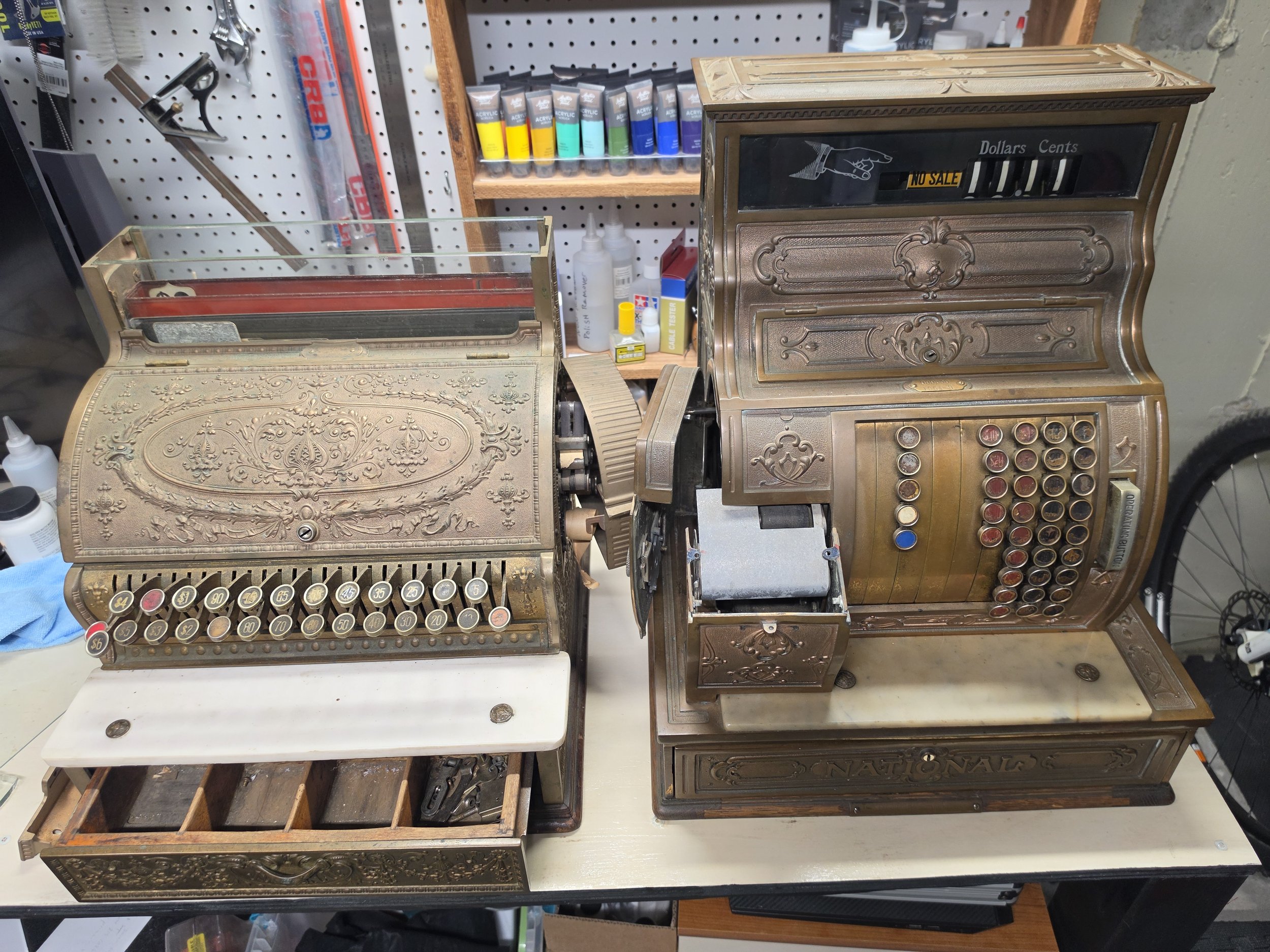
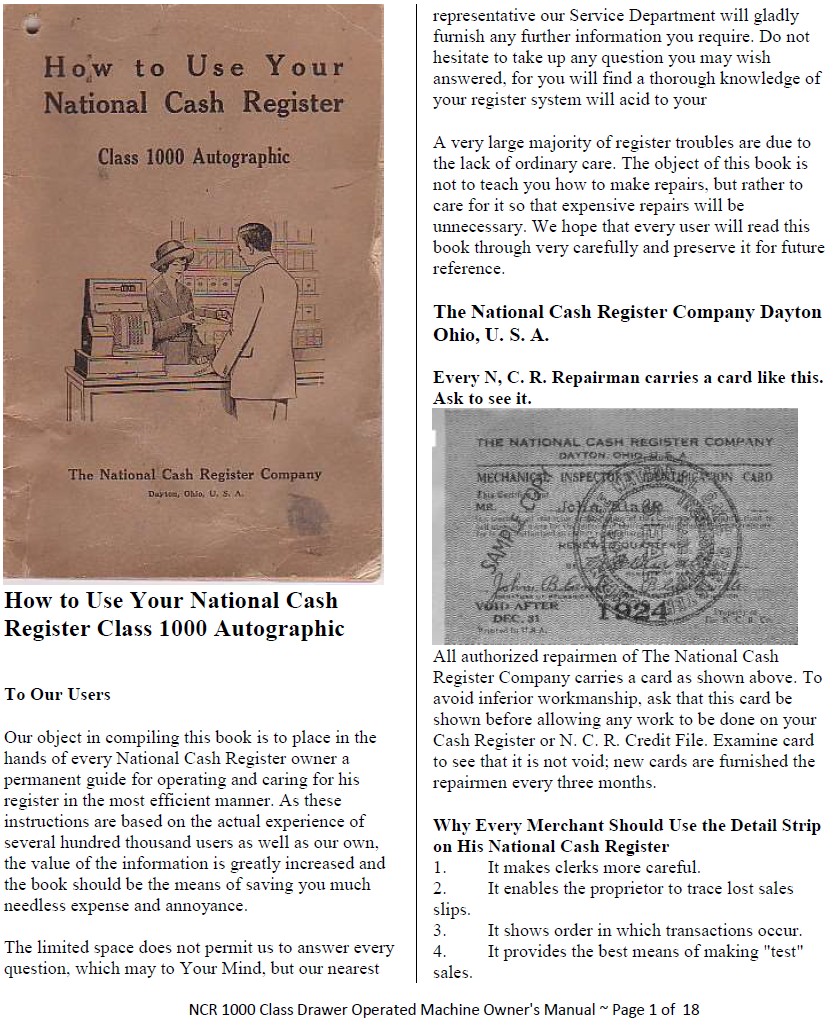
They say they don’t build things like they used to, and after more than a century, these National Cash Registers prove it.
We’re kicking off our latest project:
a full mechanical restoration and digital conversion of two Brass Era icons.
On the bench:
~1912 NCR Model 332 (G Finish)
A late brass-era build—structured, reliable, made for a growing retail world.~1908–1912 NCR Stylized No. 8 (1054 G Finish)
Earlier, heavier in craft—ornate, sculpted, and built when form followed the maker.
These aren’t display pieces.
They’re meant to run.
We’re bringing the internals back, gears, linkages, and bells restored to run the way they were meant to.
Then comes the change.
Modern systems, integrated beneath the surface, turning them into fully functional Point of Sale systems without stripping away what makes them what they are.
One will anchor the storefront. The other will travel with us.
A bridge between century-old mechanics and modern commerce.
Where every transaction at Wyndrunner Farm begins with history in motion.
Follow along as we turn over 250 lbs of cast iron and brass into something that shouldn’t exist, but does.
The 1911 “Wisconsin Original” (NCR Model 1054-G)
Restoration Project
Some machines are old.
Some are rare.
And some carry a story with them.
This is one of those machines.
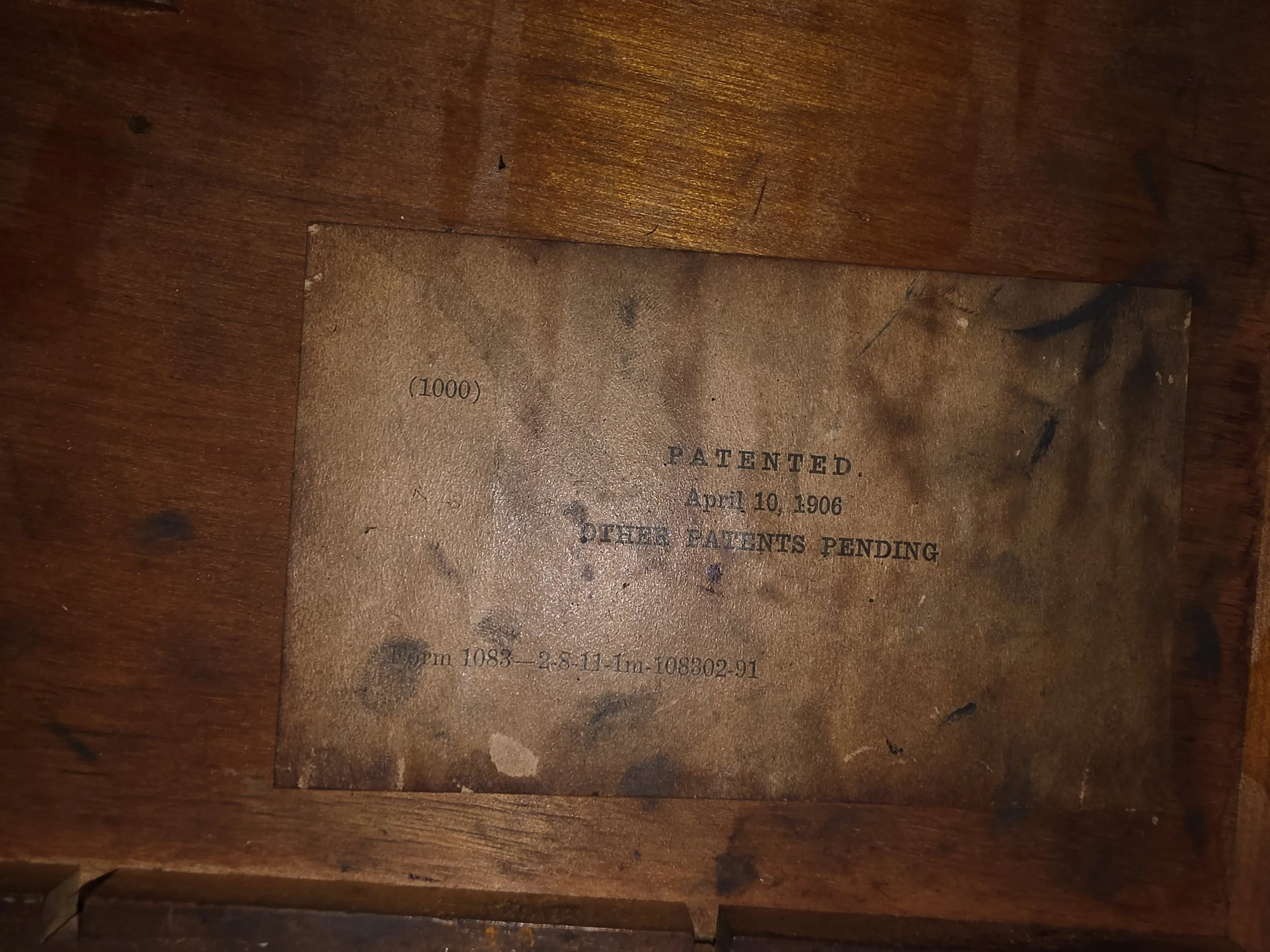
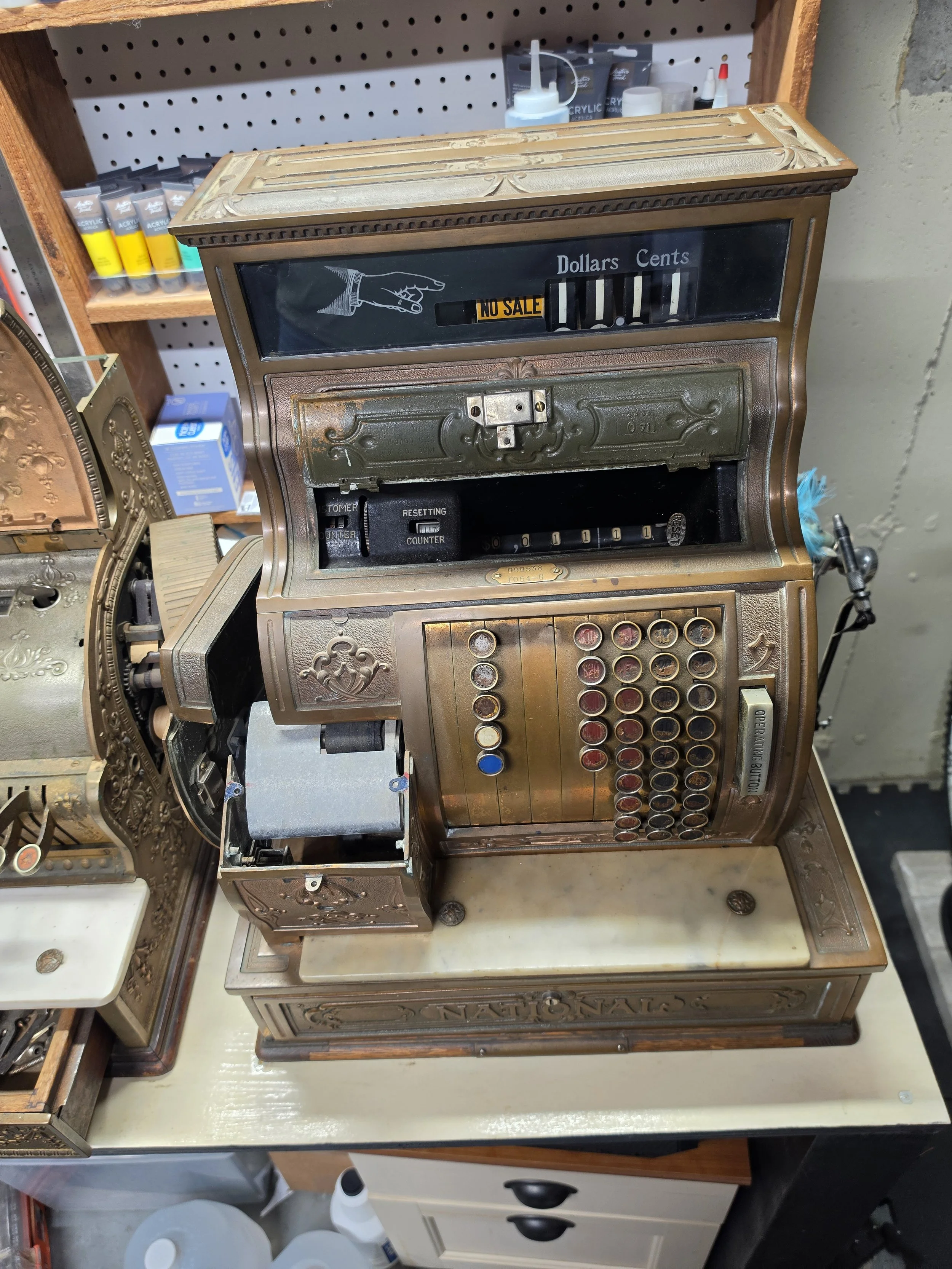
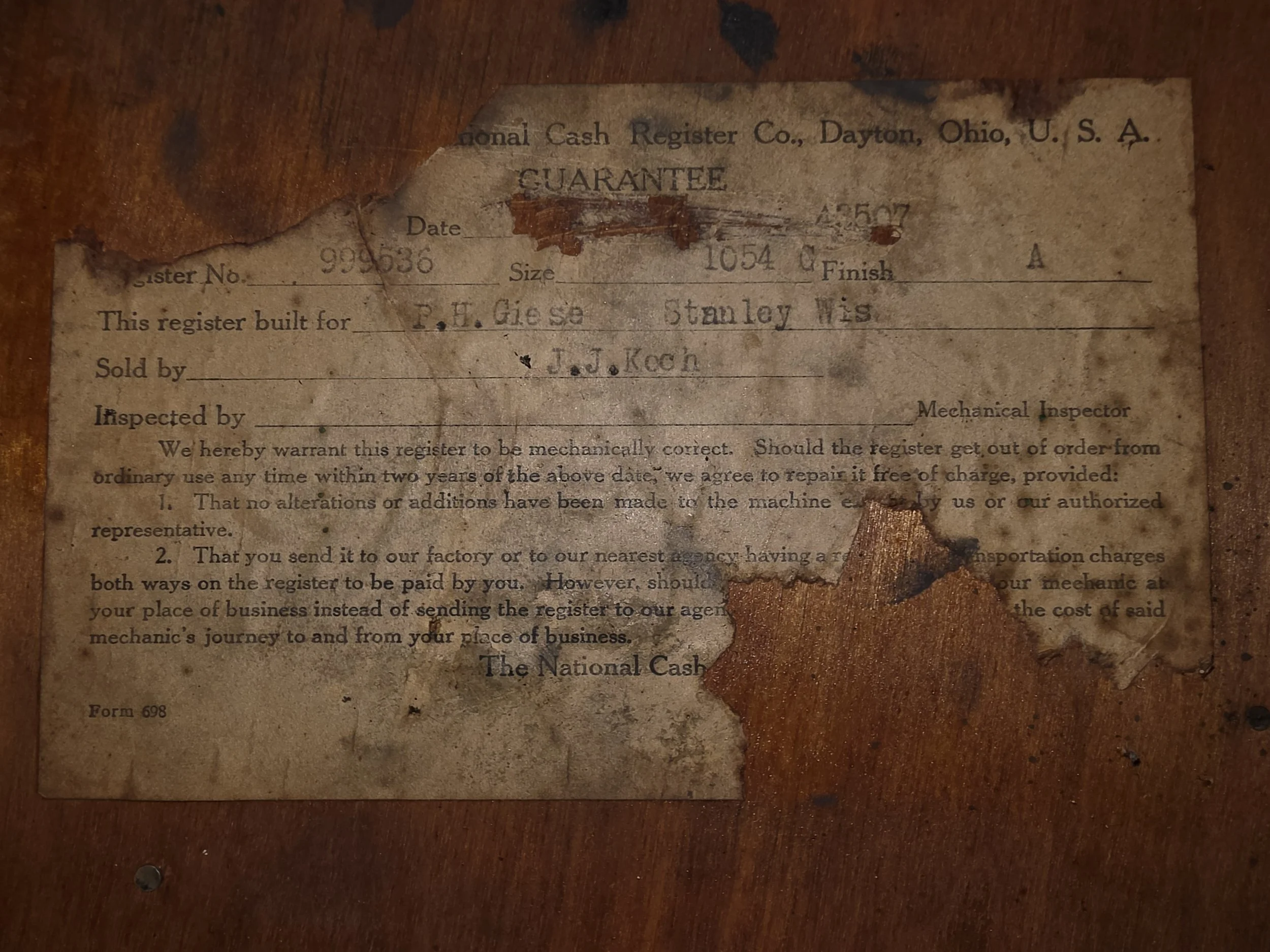
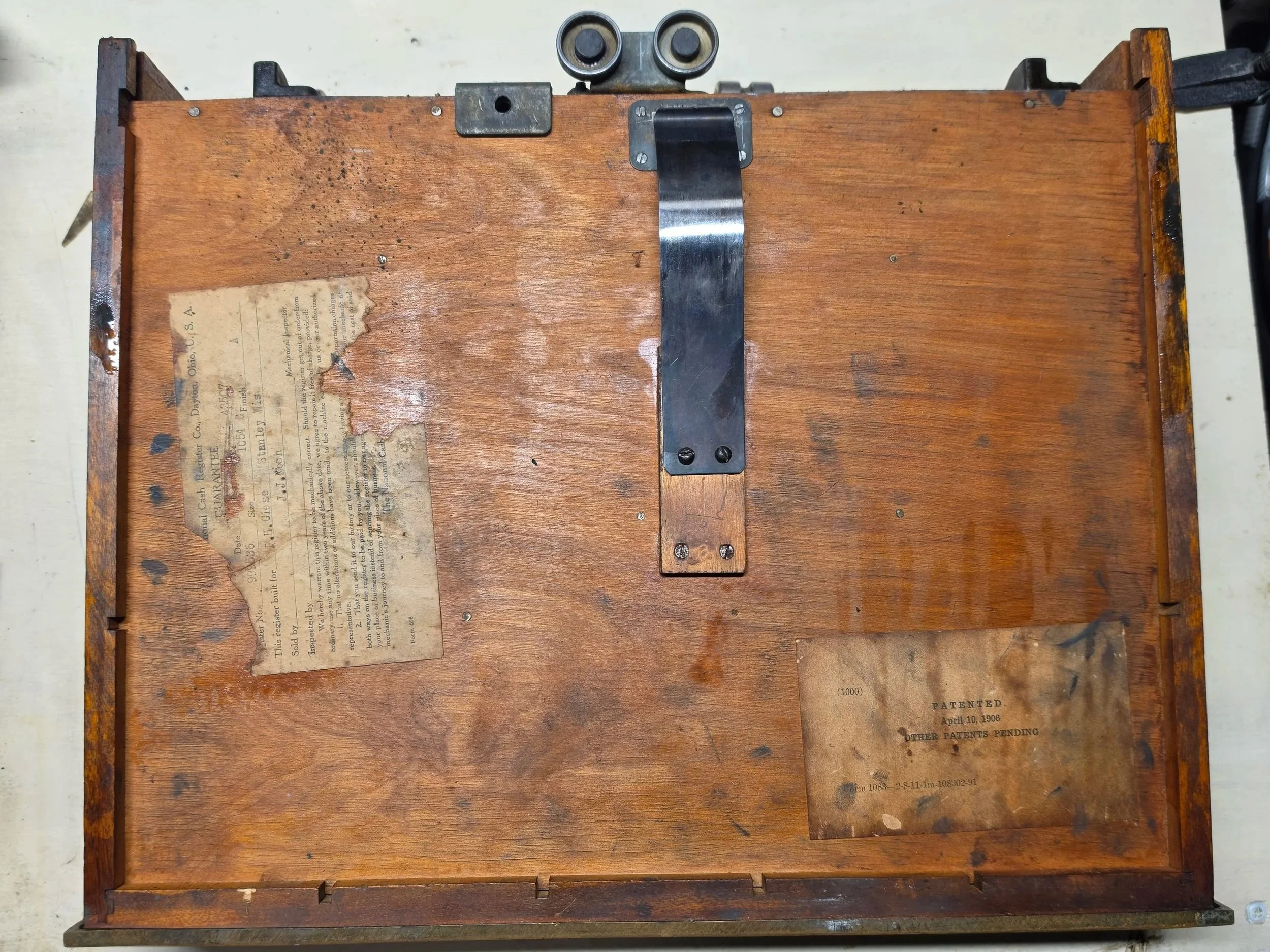
Built in 1911 by National Cash Register Company in Dayton, Ohio, this register was factory-built specifically for P.H. Giese of Stanley, Wisconsin. Over a century later, the original NCR guarantee tag still survives inside the cabinet, confirming its identity, origin, and original owner.
This machine is now the first major restoration project in Reviving the Ring — our long-term effort to restore and preserve historic brass-era cash registers while carefully integrating modern technology beneath the surface.
The Machine
Manufacturer: National Cash Register Company (NCR)
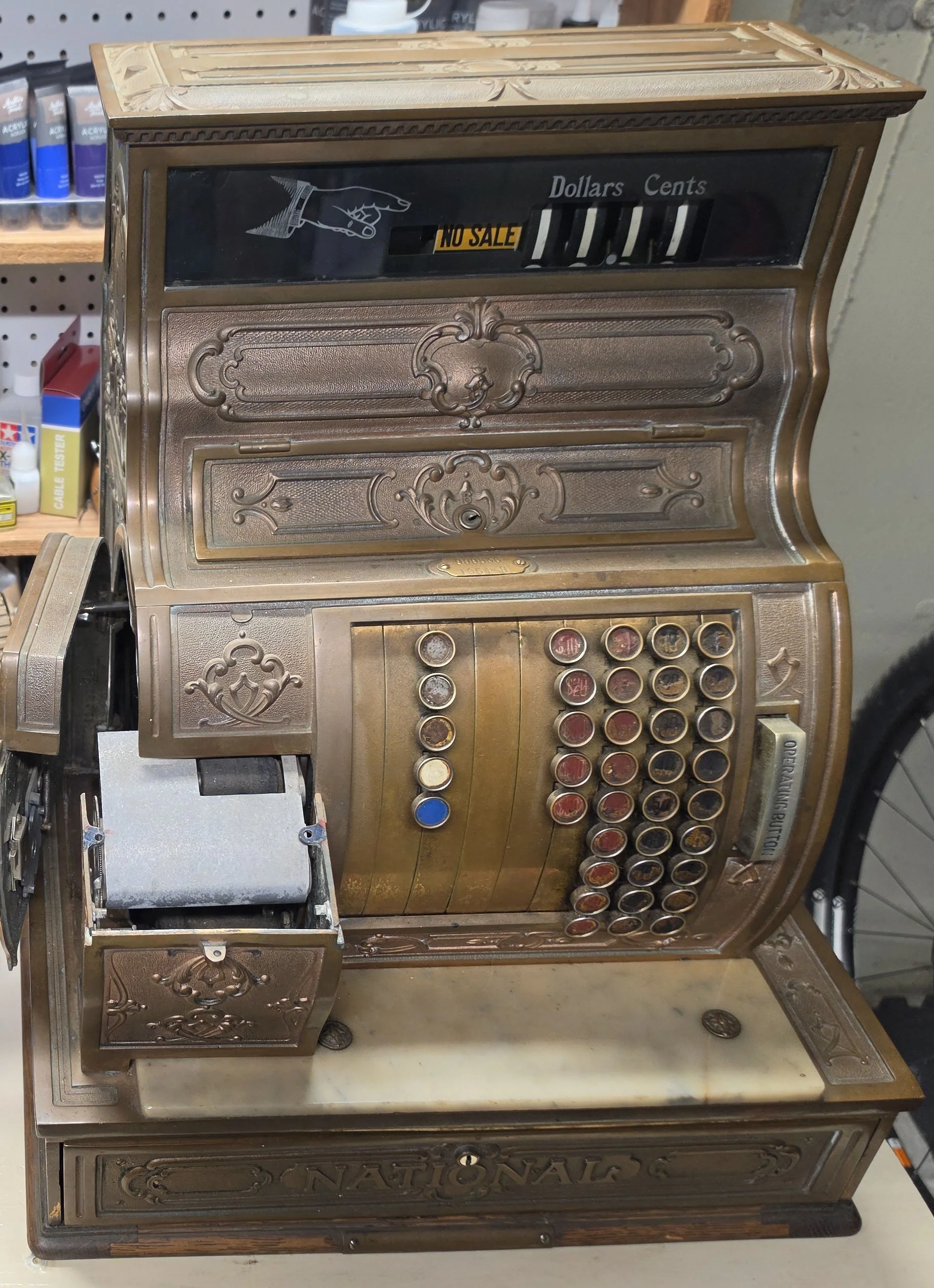
Model: 1054-G
Serial Number: 999536
Year Built: May 29, 1911
Class: 1000 Series
Original Owner: P.H. Giese — Stanley, Wisconsin
Salesman Listed on NCR Guarantee: J.J. Koch
Original Finish: “A Finish” — polished brass exterior
Patent Reference: April 10, 1906
The NCR Class 1000 line was one of the most successful commercial register platforms of its era. These were serious business machines used in general stores, groceries, pharmacies, hardware stores, and other growing American businesses during the early 1900s.
This was not decorative furniture.
It was mechanical accounting technology.
More Than a Cash Drawer
What makes these machines remarkable is that they are entirely mechanical.
No electricity.
No circuits.
No processors.
Yet this register mechanically performs:
Transaction entry
Department tracking
Printed journal recording
Customer-facing sales display
Locked transaction sequencing
Audible confirmation bells
Anti-fraud interlocks
Running totals and accounting functions
Every key press, gear movement, spring tension, and linkage is part of a synchronized mechanical computing system designed more than 100 years ago.
The famous NCR ring was not random either. The bell strikes at a precise point in the operating cycle to confirm that the transaction completed correctly. That sound became one of the defining sounds of early American commerce.
That ring is the reason for this project’s name.
A Surviving Wisconsin Artifact
One of the most important discoveries on this machine was the surviving NCR guarantee tag still attached inside the wooden cabinet.
It identifies:
the exact machine
its serial number
its finish
its original owner
the town it was built for
and even the NCR salesman who sold it
That transforms this register from “an old antique” into a documented piece of Wisconsin retail history.
This machine likely sat on the counter of a working business in Stanley, Wisconsin while:
customers bought groceries
farmers settled accounts
goods were charged on account
and transactions were recorded one mechanical movement at a time
More than a century later, much of the machine remains intact.
Restoration Philosophy
The goal is not to erase the machine’s age.
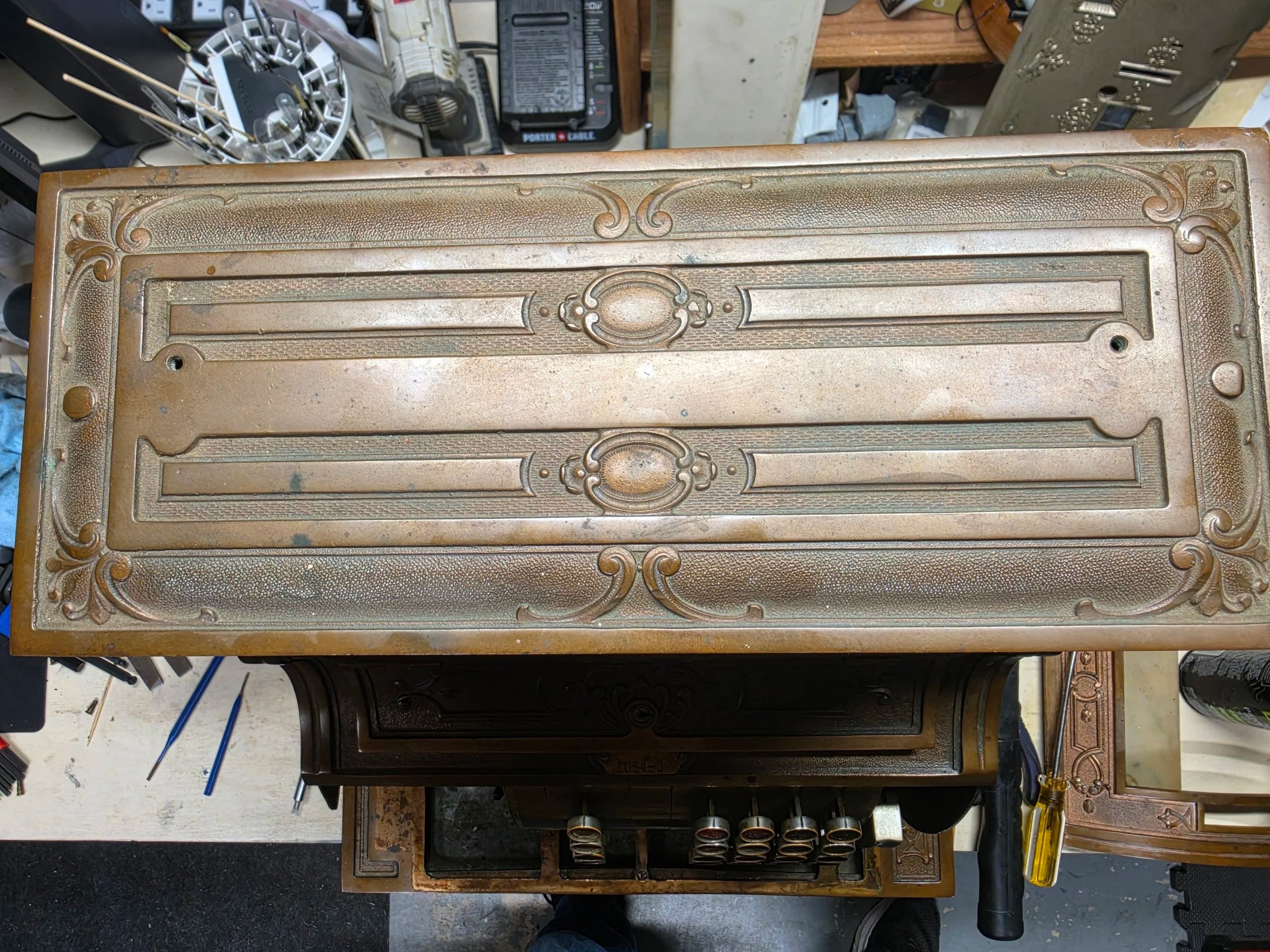
Over time, the original polished brass exterior oxidized into a deep bronze and copper patina that reflects more than a century of use and survival. Rather than over-polishing the machine into something that looks factory-new, the plan is to preserve and stabilize that history while restoring full mechanical operation.
Our approach is:
Preserve the History
Maintain original surfaces where possible
Preserve factory markings and tags
Retain authentic wear and patina
Restore the Mechanics
Clean and free hardened mechanisms
Rebuild timing and movement systems
Restore full operational cycling
Preserve original engineering wherever possible
Integrate Modern Technology Carefully
Future plans include discreet electronic modernization hidden beneath the surface:
Bluetooth integration
POS communication capability
Digital transaction interfacing
All while preserving the original appearance and mechanical behavior of the machine.
No visible screens.
No cutting up the cabinet.
No destroying history.
The goal is to make the machine feel alive again while respecting what it is.
Why This Matters
Machines like this helped shape modern commerce.
Before NCR registers became widespread, theft, accounting manipulation, and inconsistent bookkeeping were major problems for businesses. NCR systems introduced mechanical accountability to retail. Every sale became part of a controlled, recorded transaction cycle.
These registers were among the earliest business machines designed to standardize trust.
Today, most surviving examples are:
incomplete
frozen solid
stripped for parts
or turned into static decoration
This machine survived as something far more important:
an authentic, mechanically intact artifact of early American retail history.
The Beginning of Reviving the Ring
This 1911 NCR 1054-G is the first major restoration in the Reviving the Ring project, but it will not be the last.
The goal of the project is not only to restore these machines mechanically, but to preserve the experience surrounding them:
the sound
the movement
the craftsmanship
and the feeling of interacting with something built to last
Because some machines deserve more than storage.
They deserve to ring again. now.
Update 9 May 2025
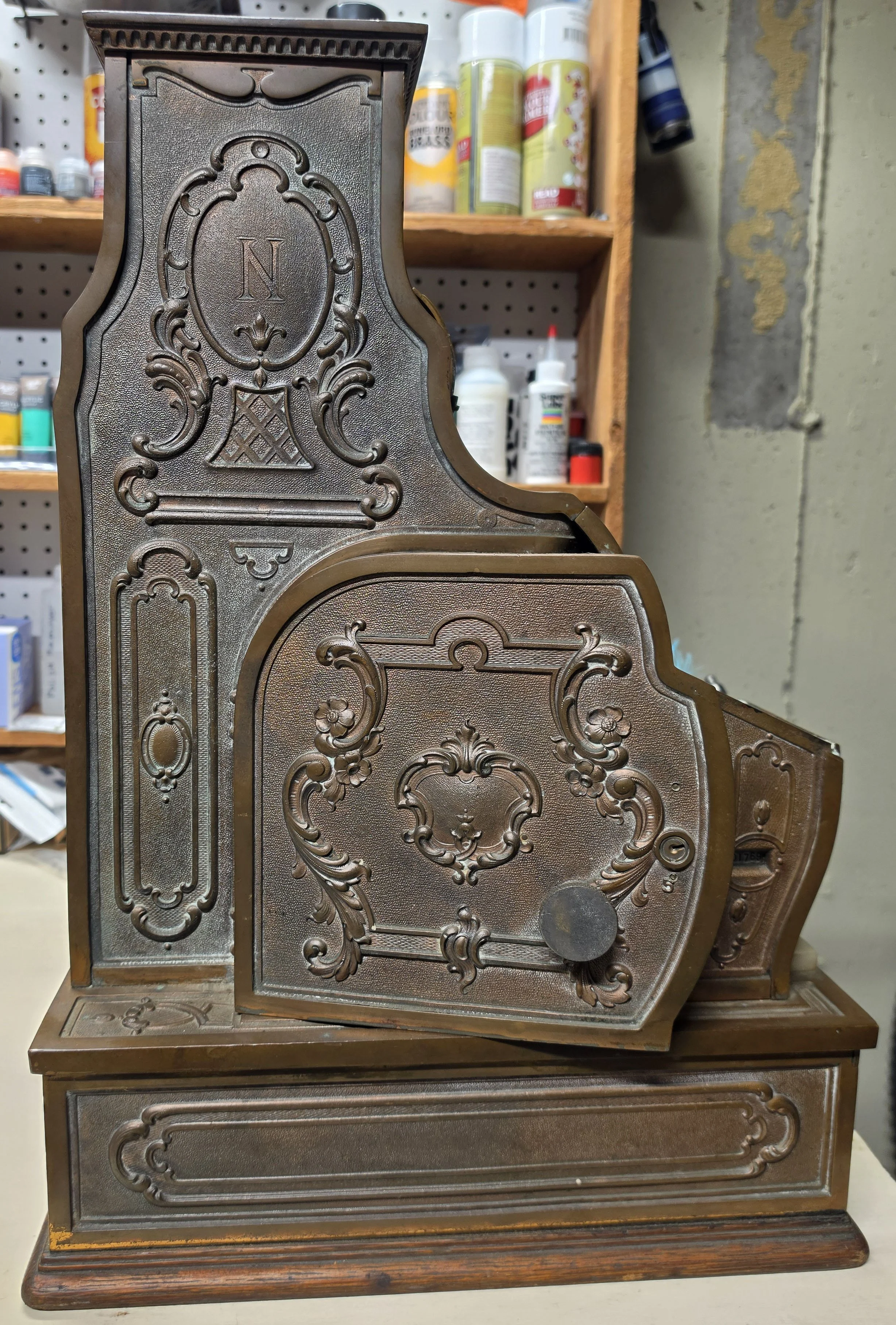
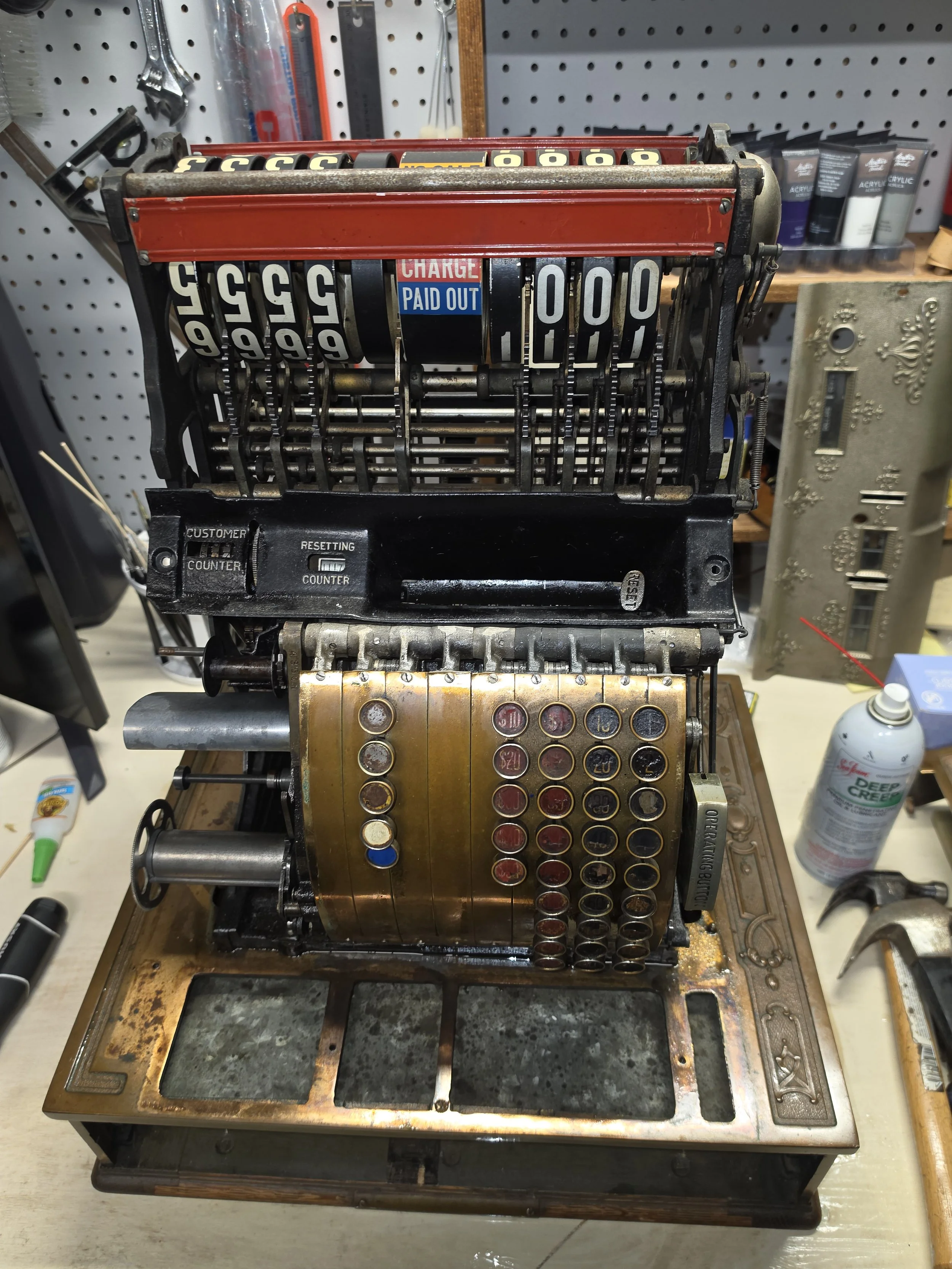
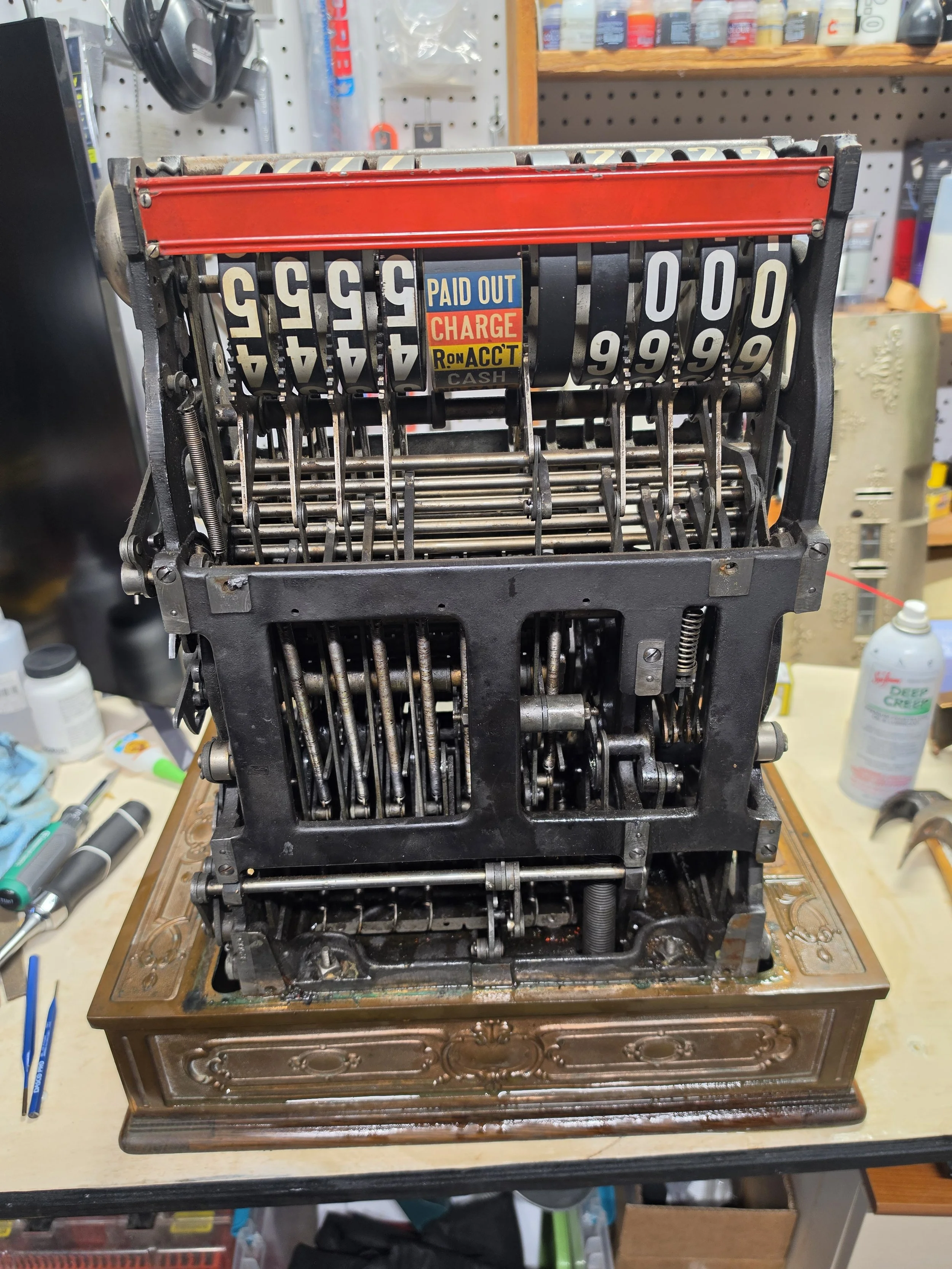
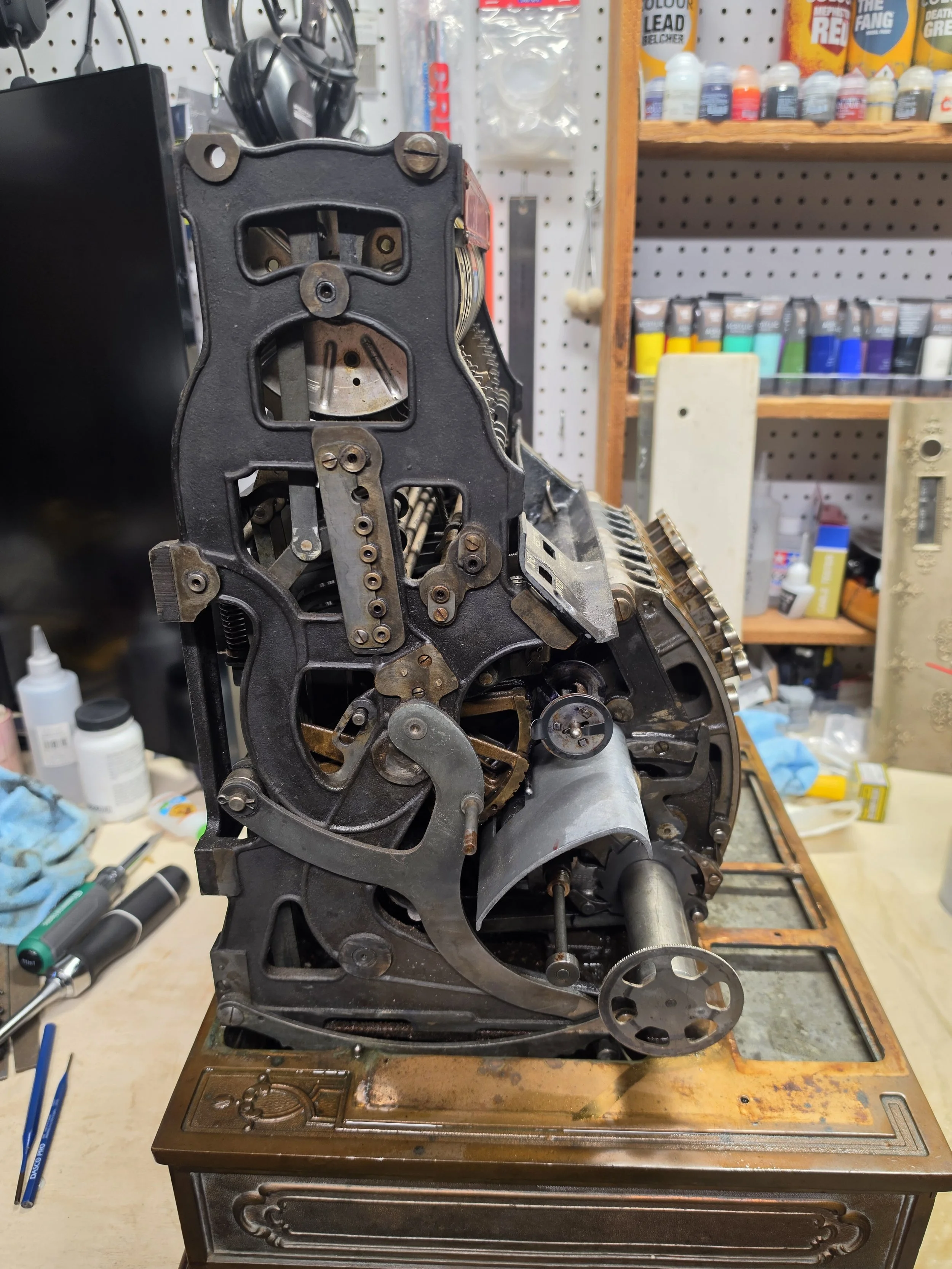
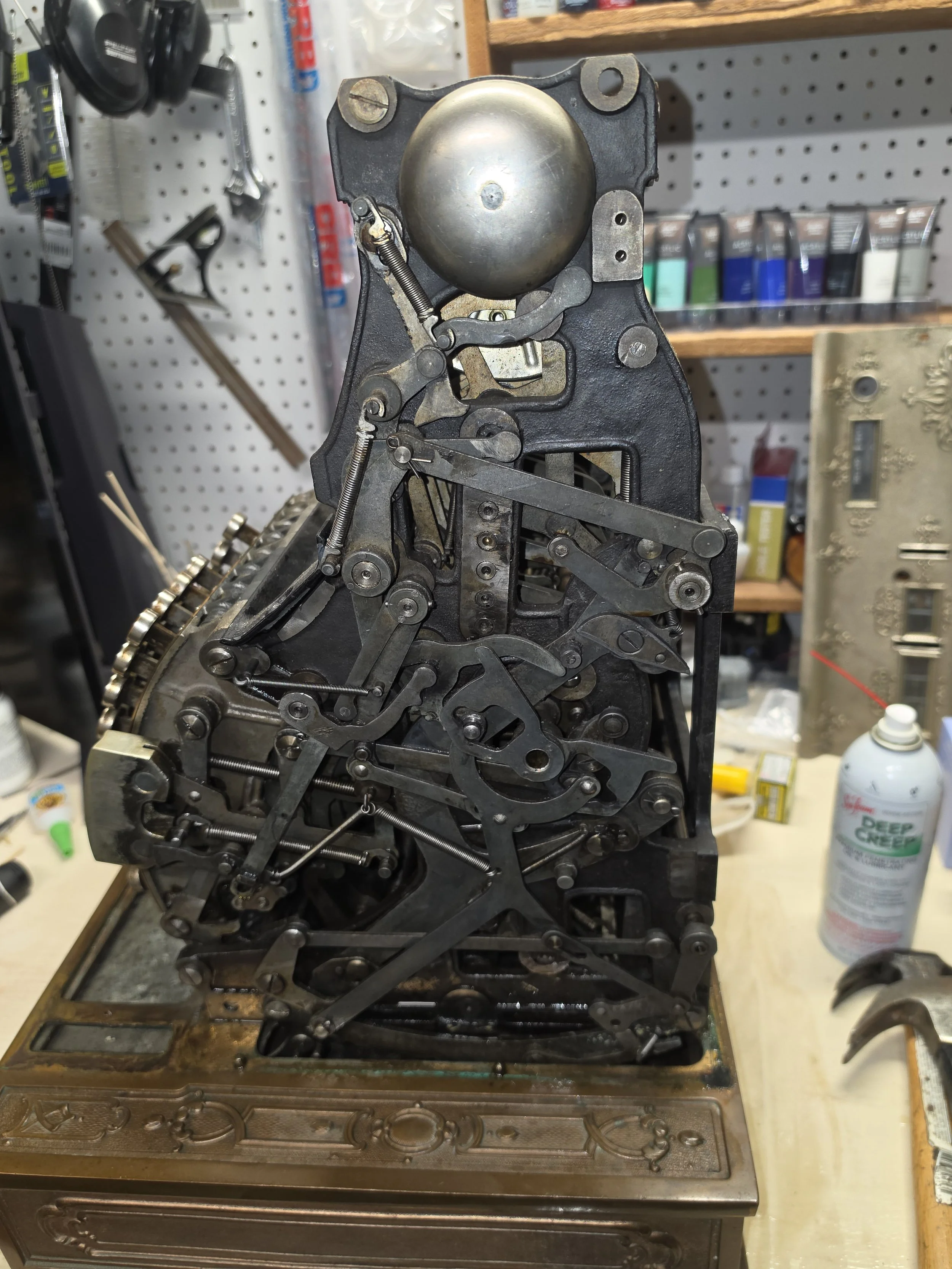
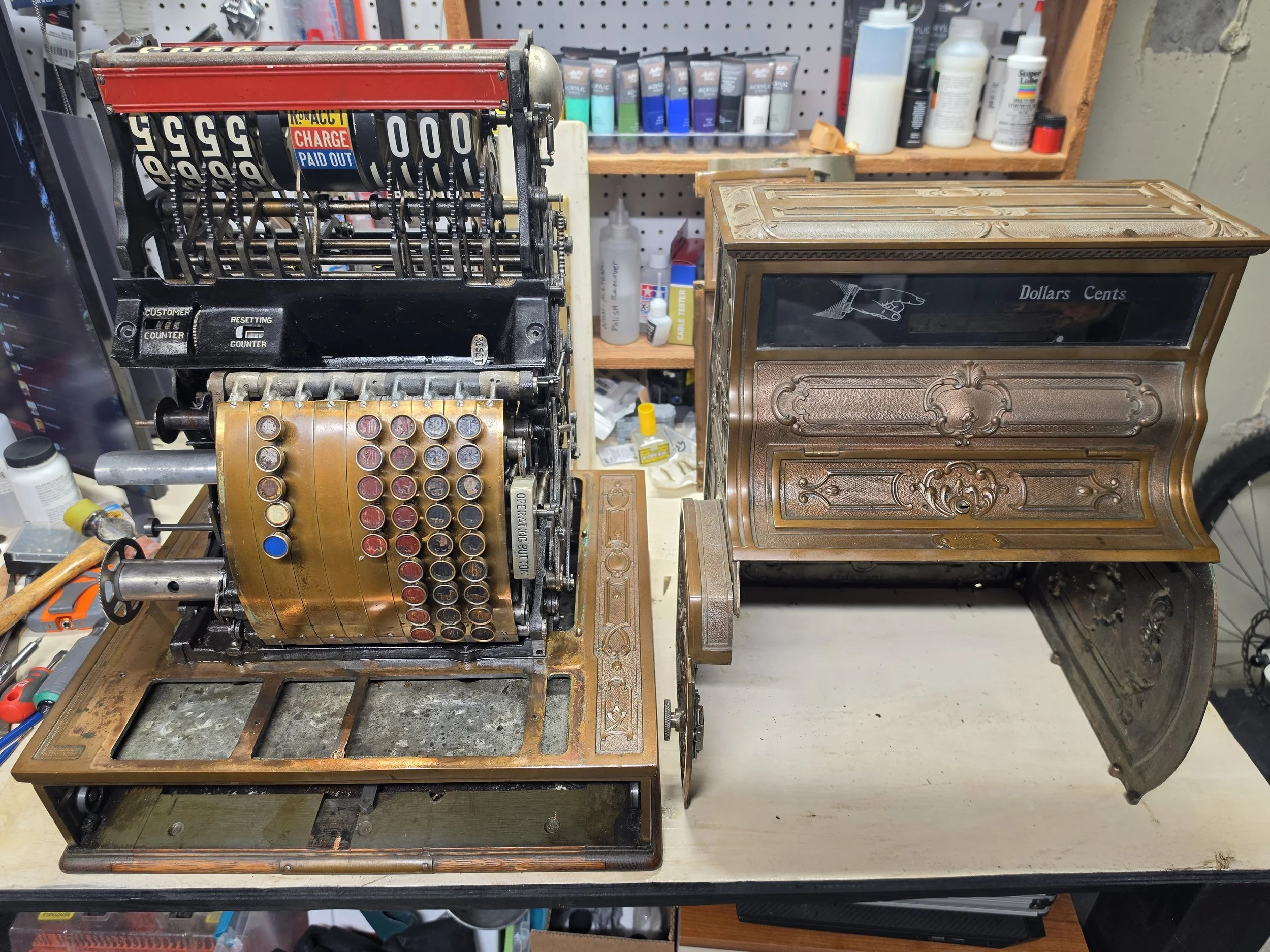
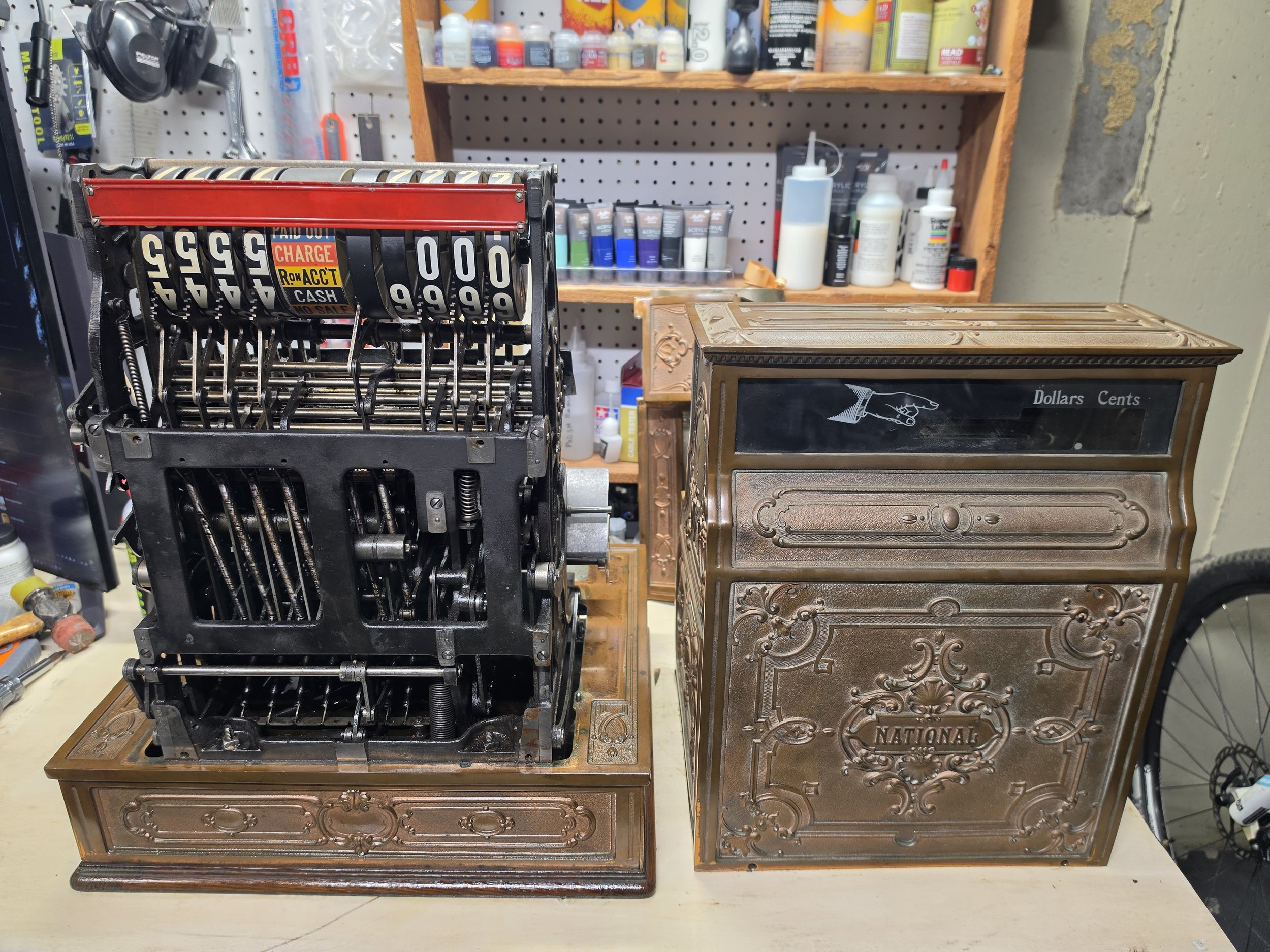
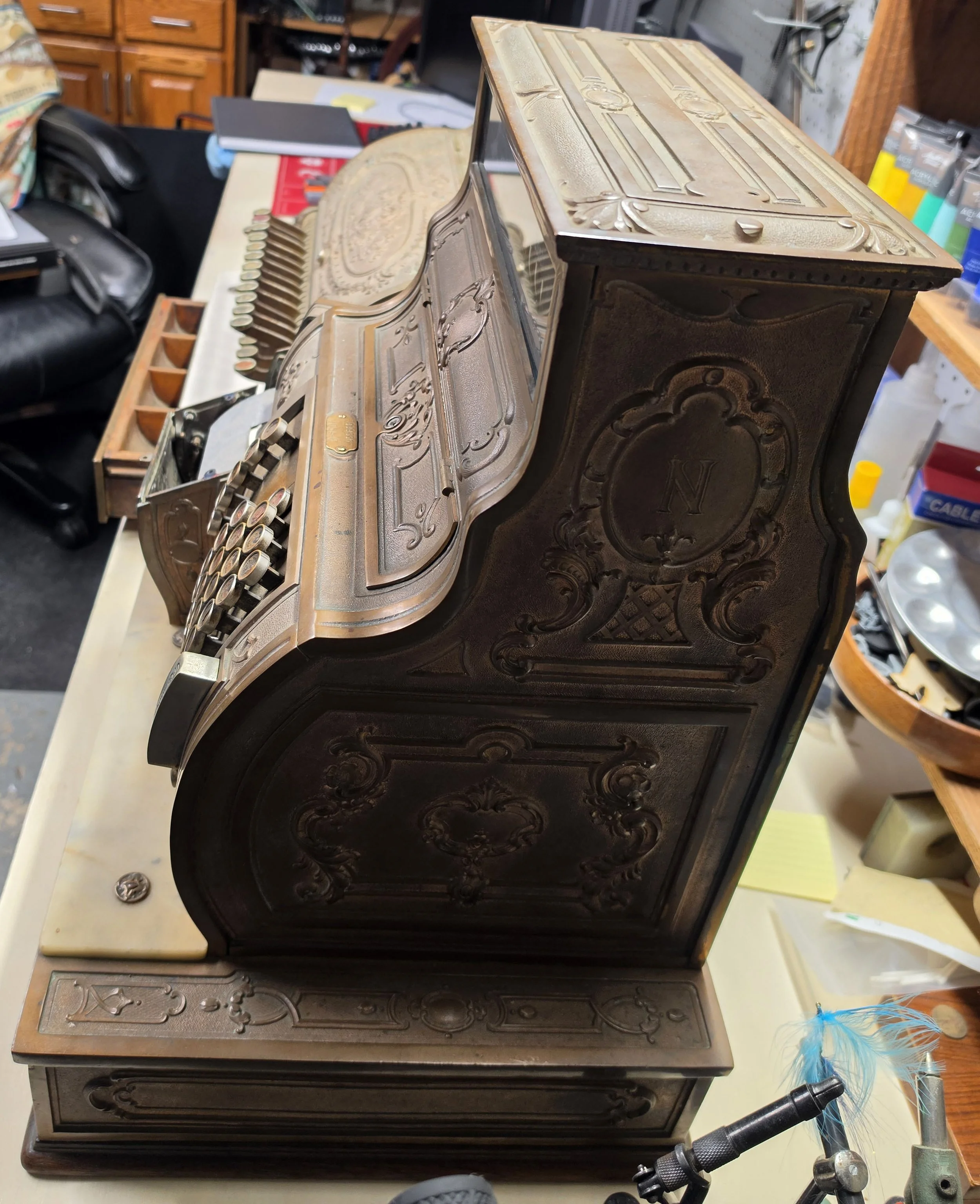
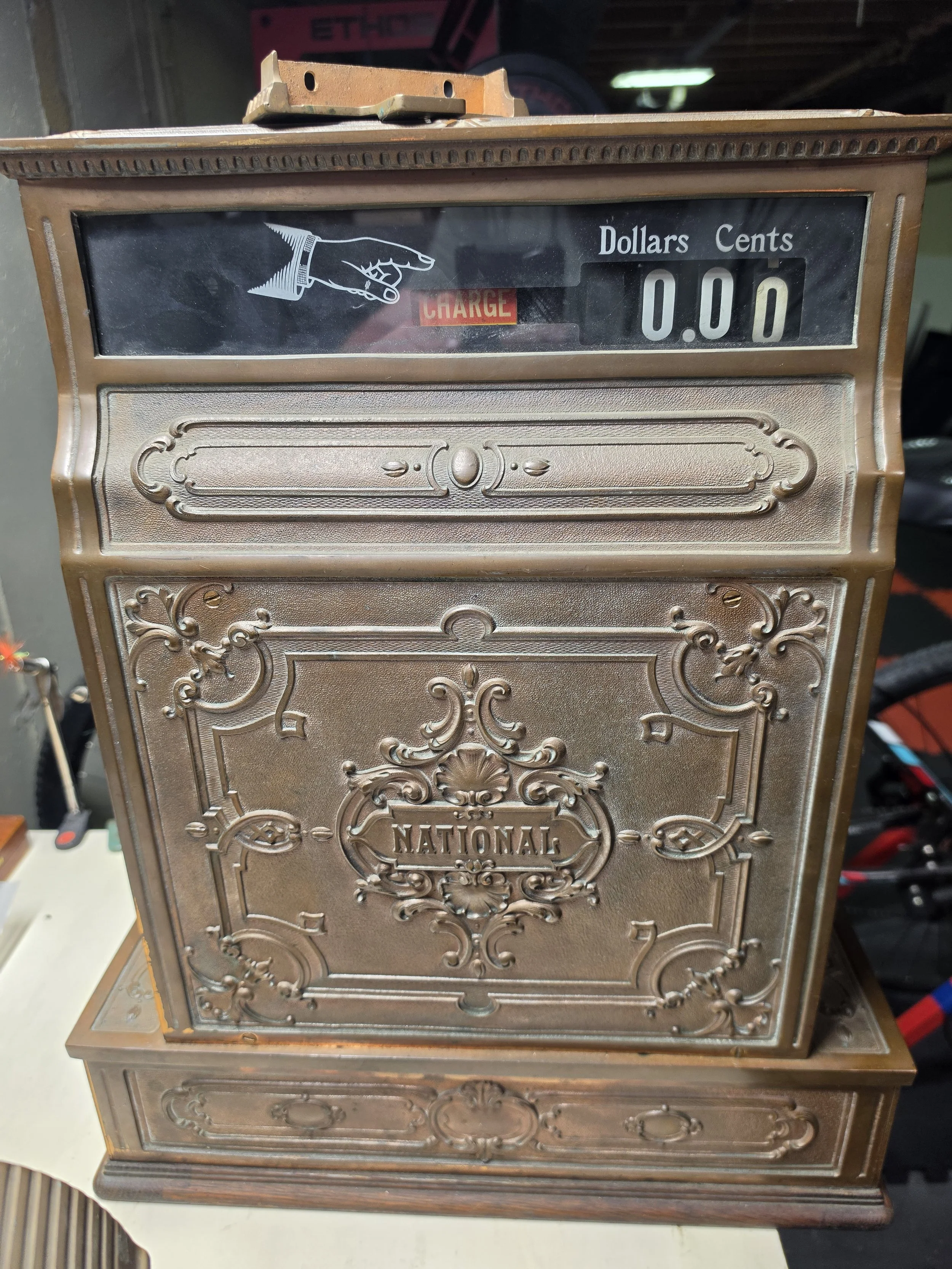
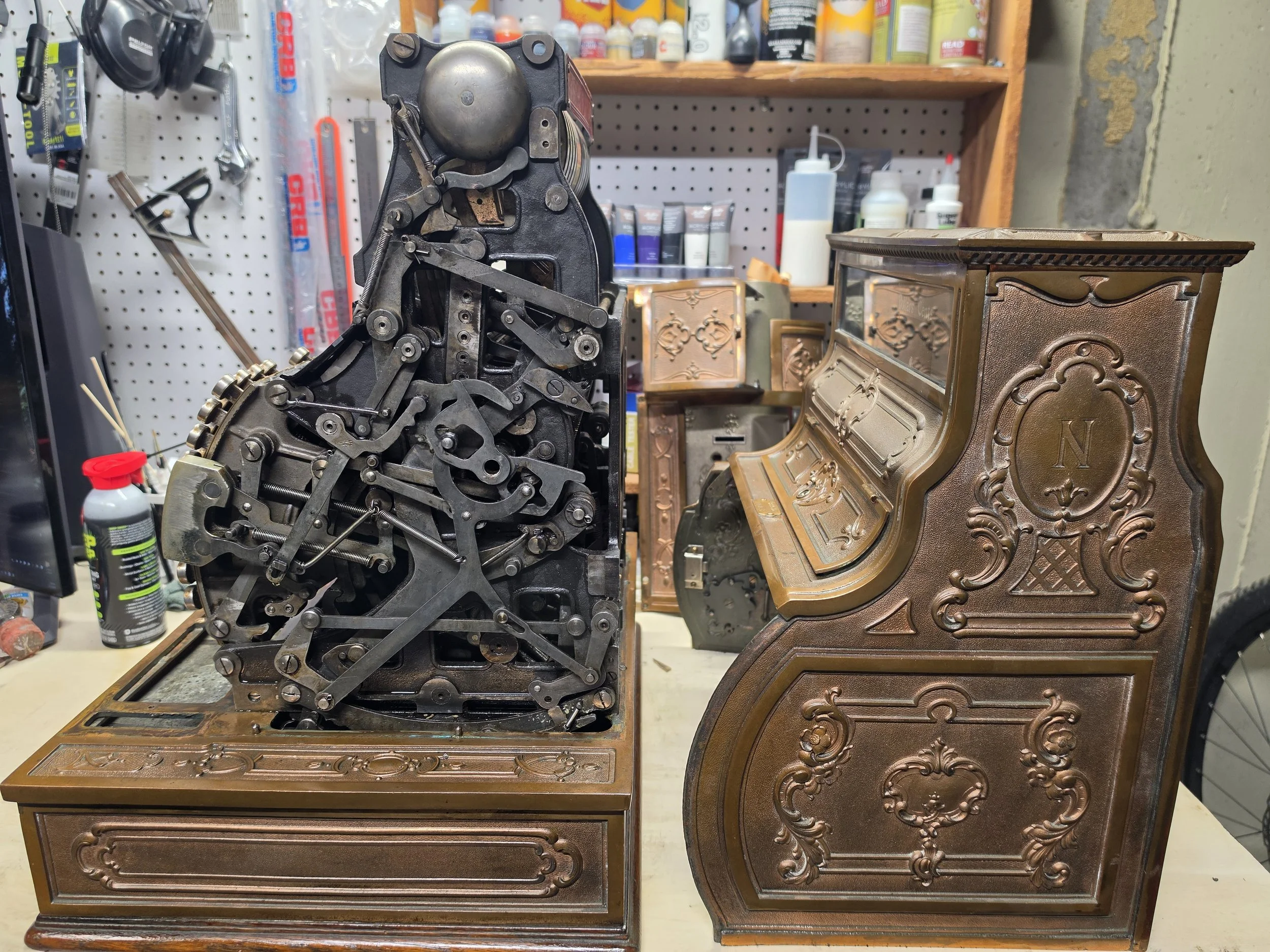
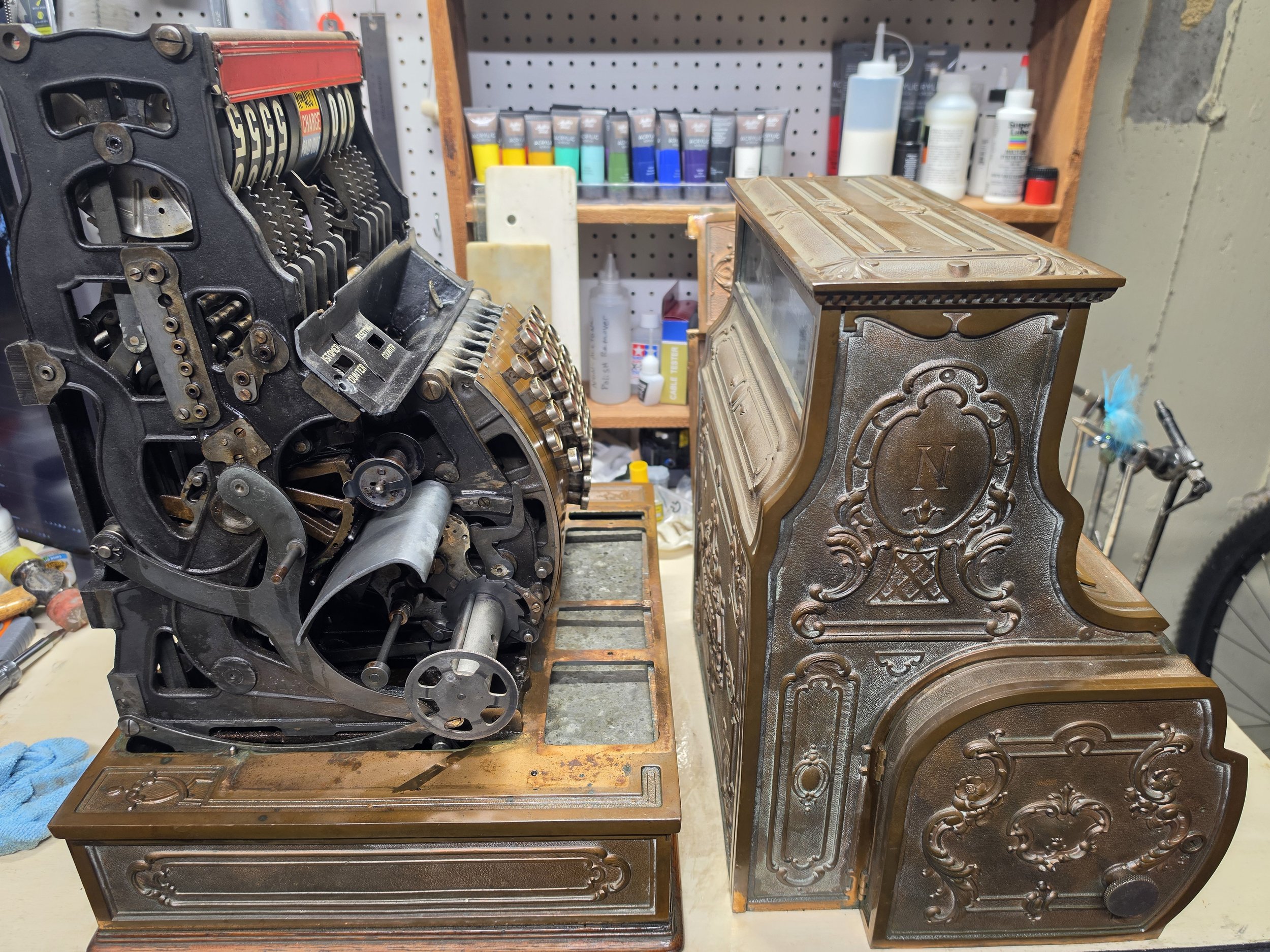
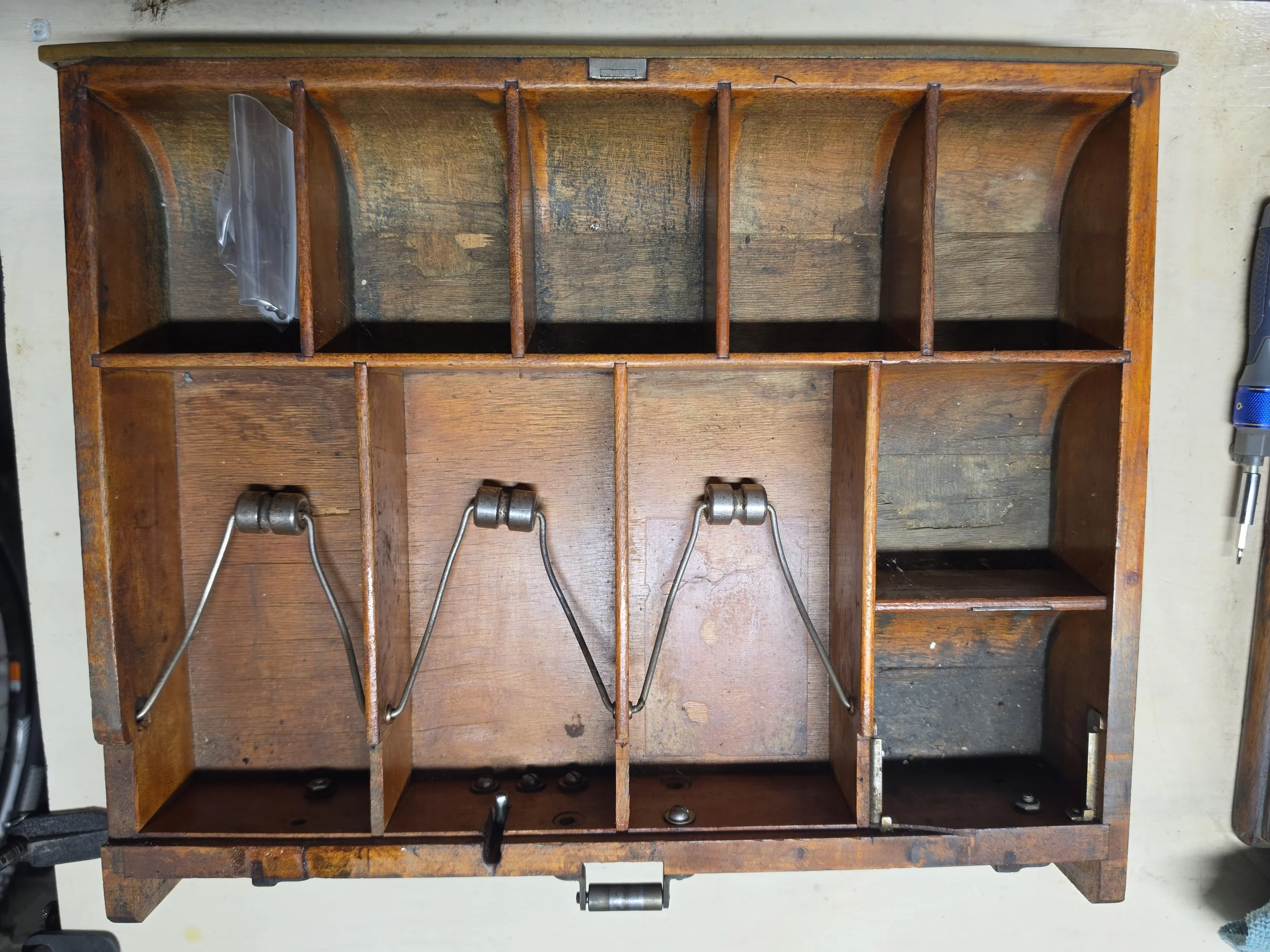
The register is remarkably complete for its age.
Major surviving features include:
Original ornate cabinet
Indicator drums
Bell assembly
Side linkage systems
Key stacks
Journal/receipt system
Drawer assembly
Internal mechanisms
Original guarantee documentation
Even more impressive:
the machine still functions mechanically.
The keys move.
The indicators operate.
The internal mechanisms cycle.
The transaction flags still work.
That means this restoration is not about rebuilding a destroyed machine from scraps.
It is about carefully bringing a surviving system back to life.
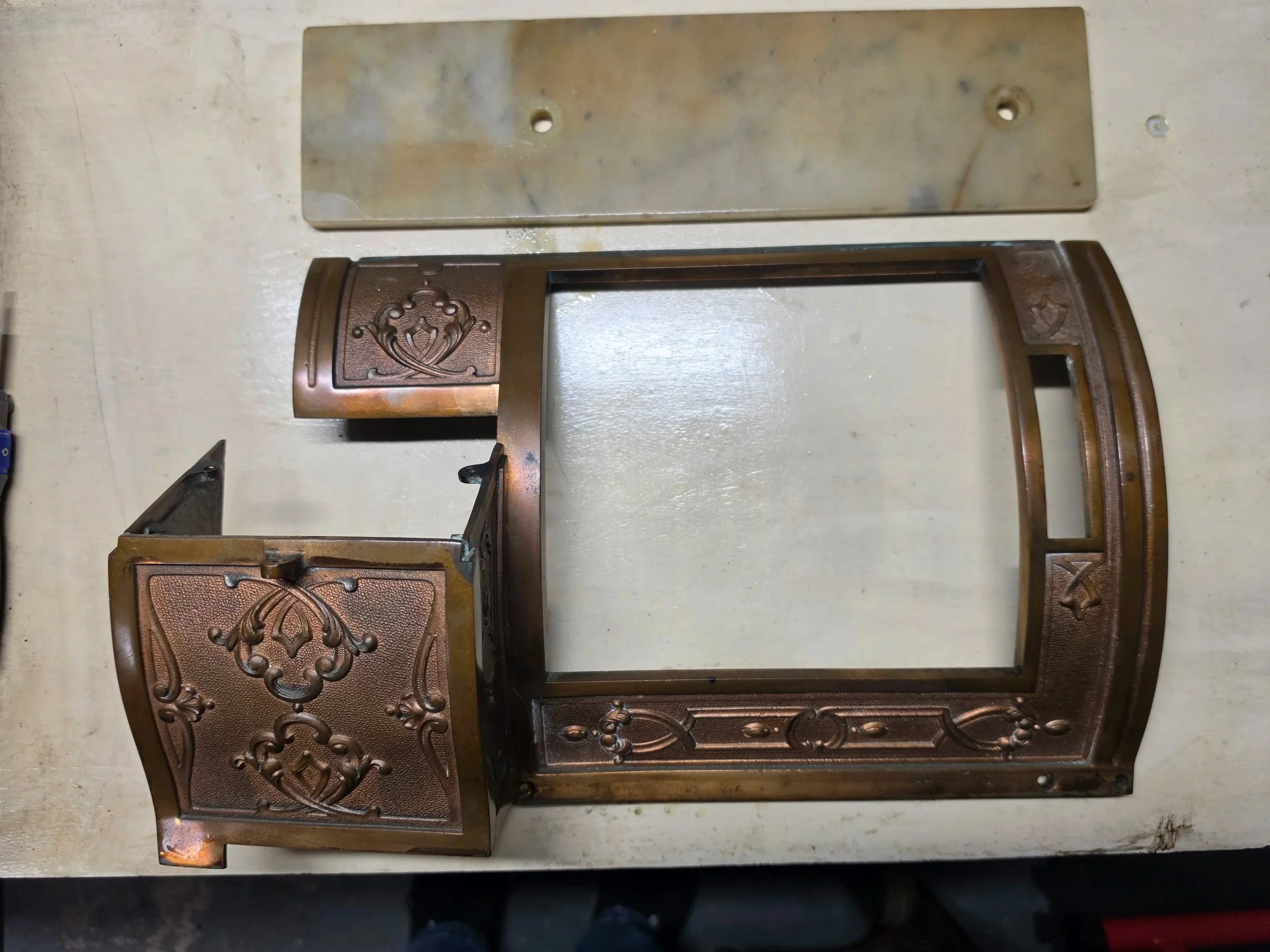
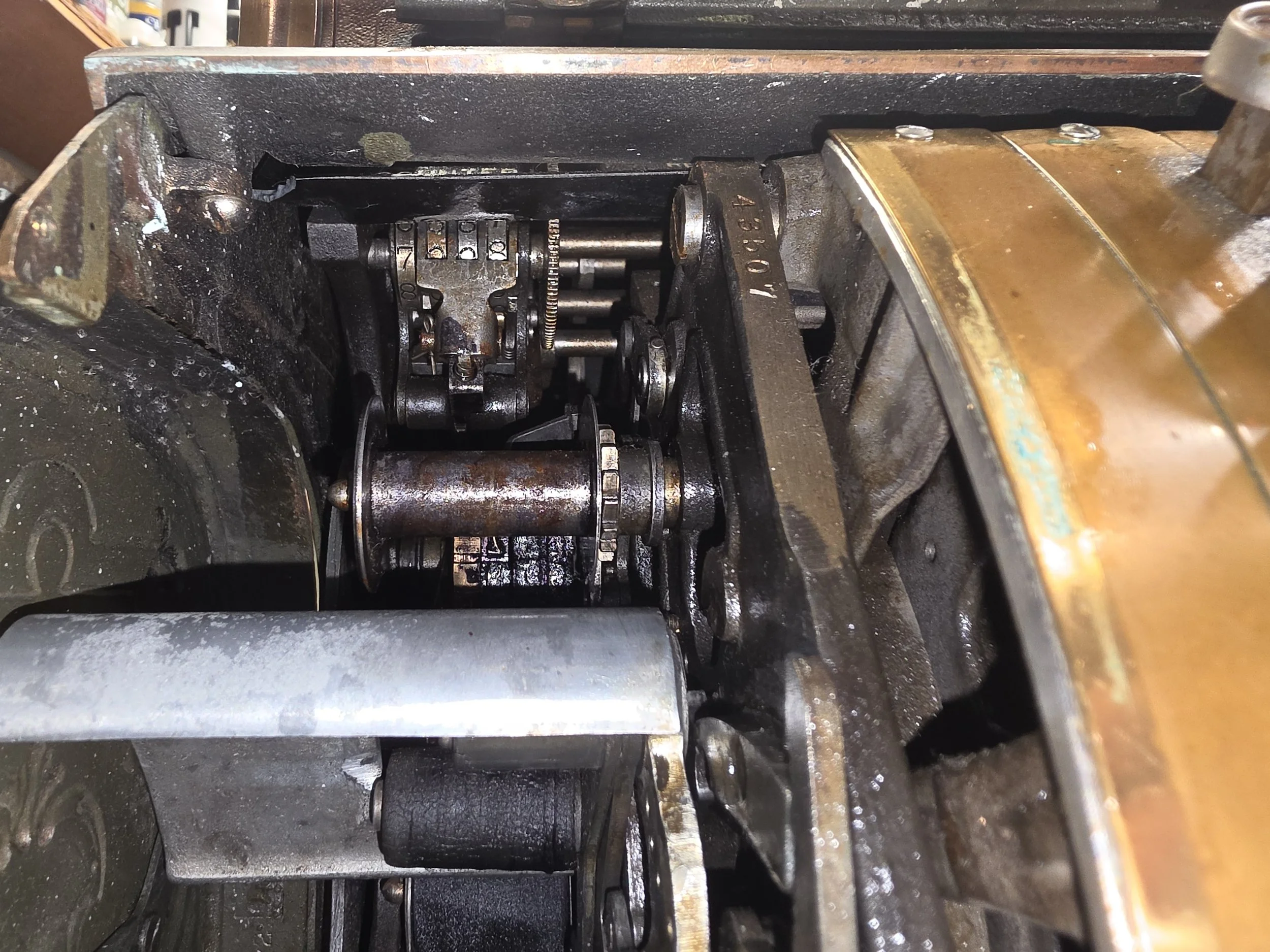
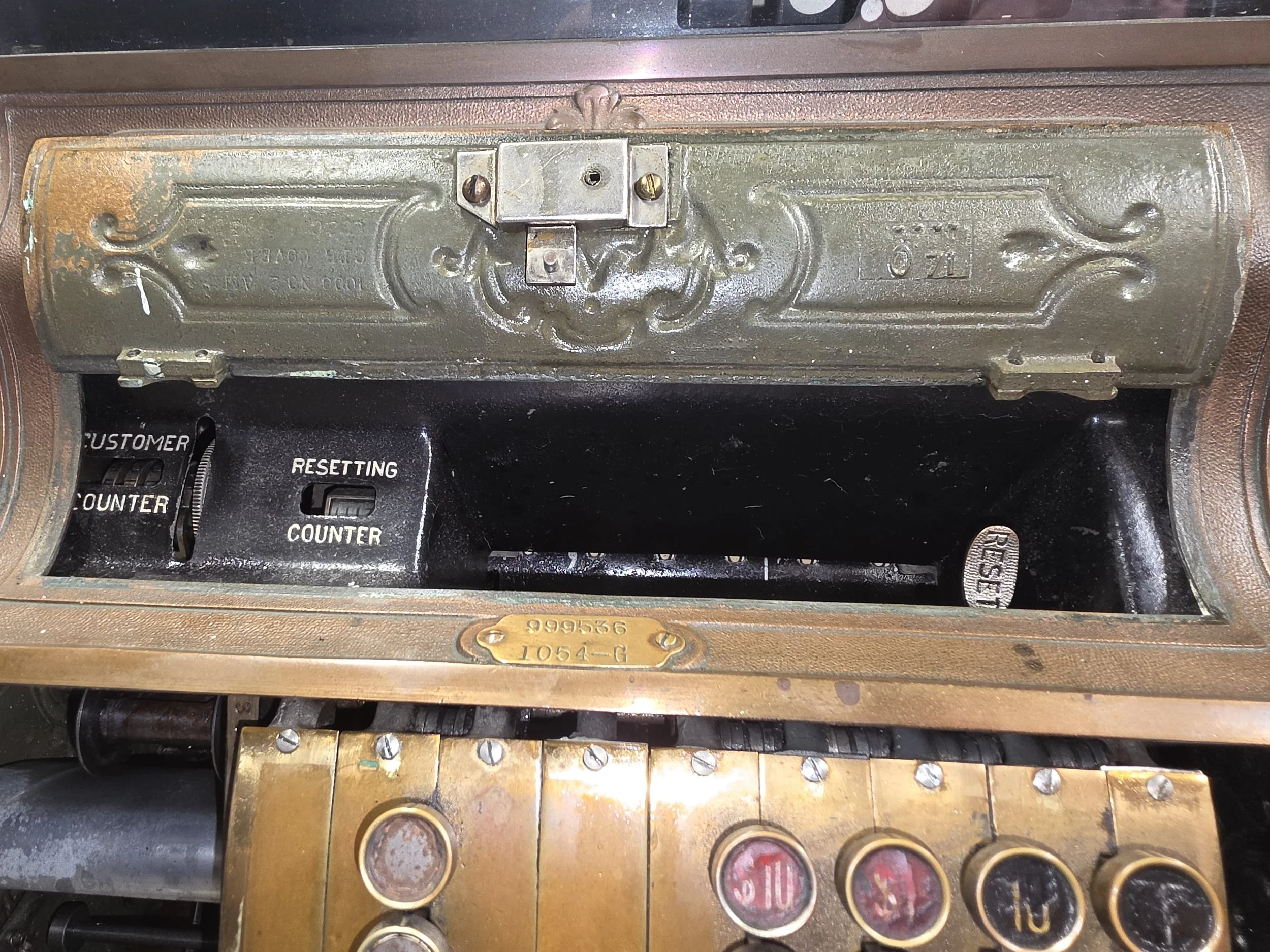
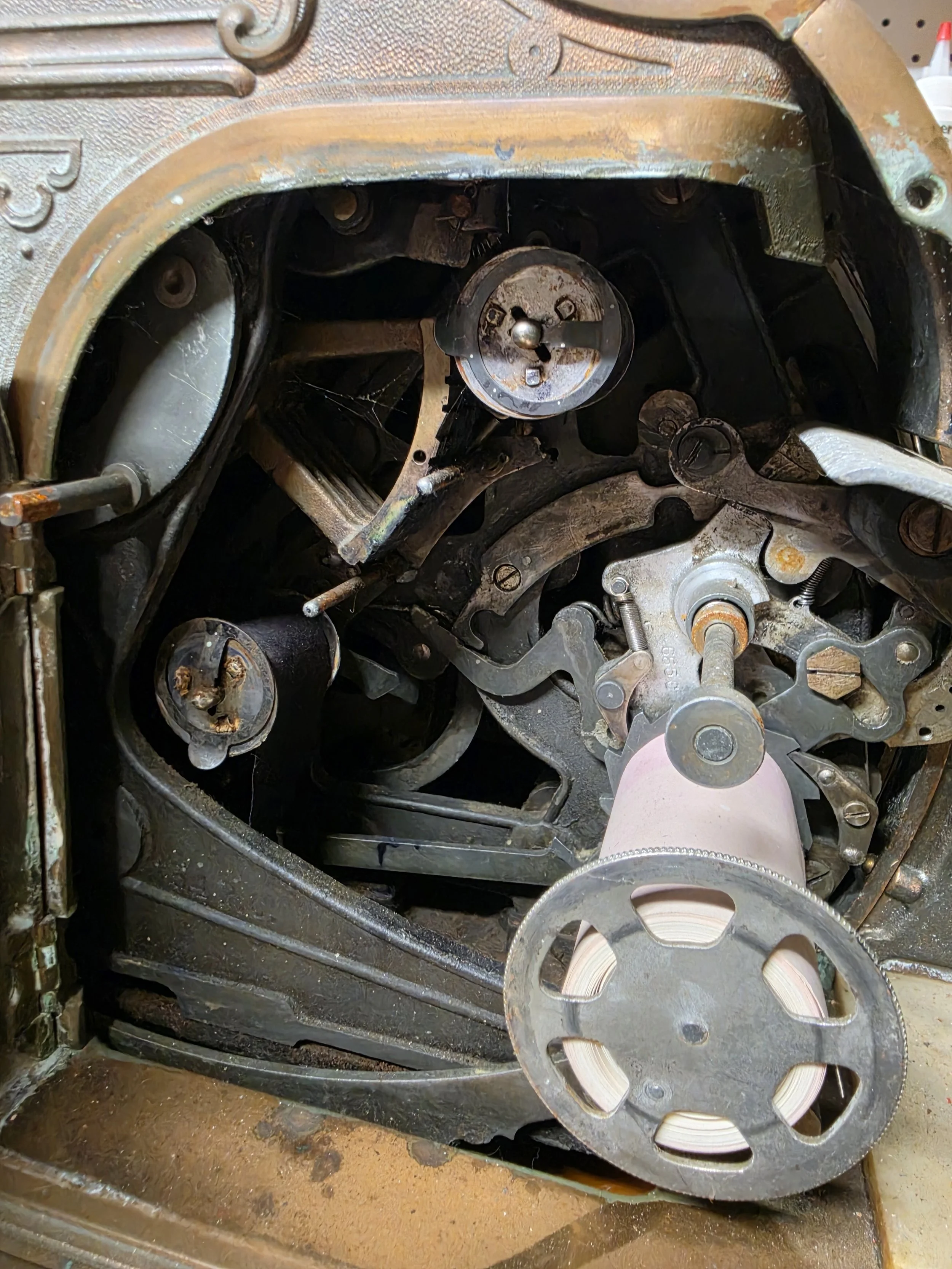
The 1913 "Chicago Classic" (Model 332)
Restoration Project
This is a Class 300 register
• Model Number: 332
• Serial Number: 1309123
• Year Built: 1913
• Original Office: Sold through the Chicago Office (Chgo Off.)
• Finish: Finish C, which is the dark, moody Copper Oxidized patina you see on it now.
Update 4 May 2025
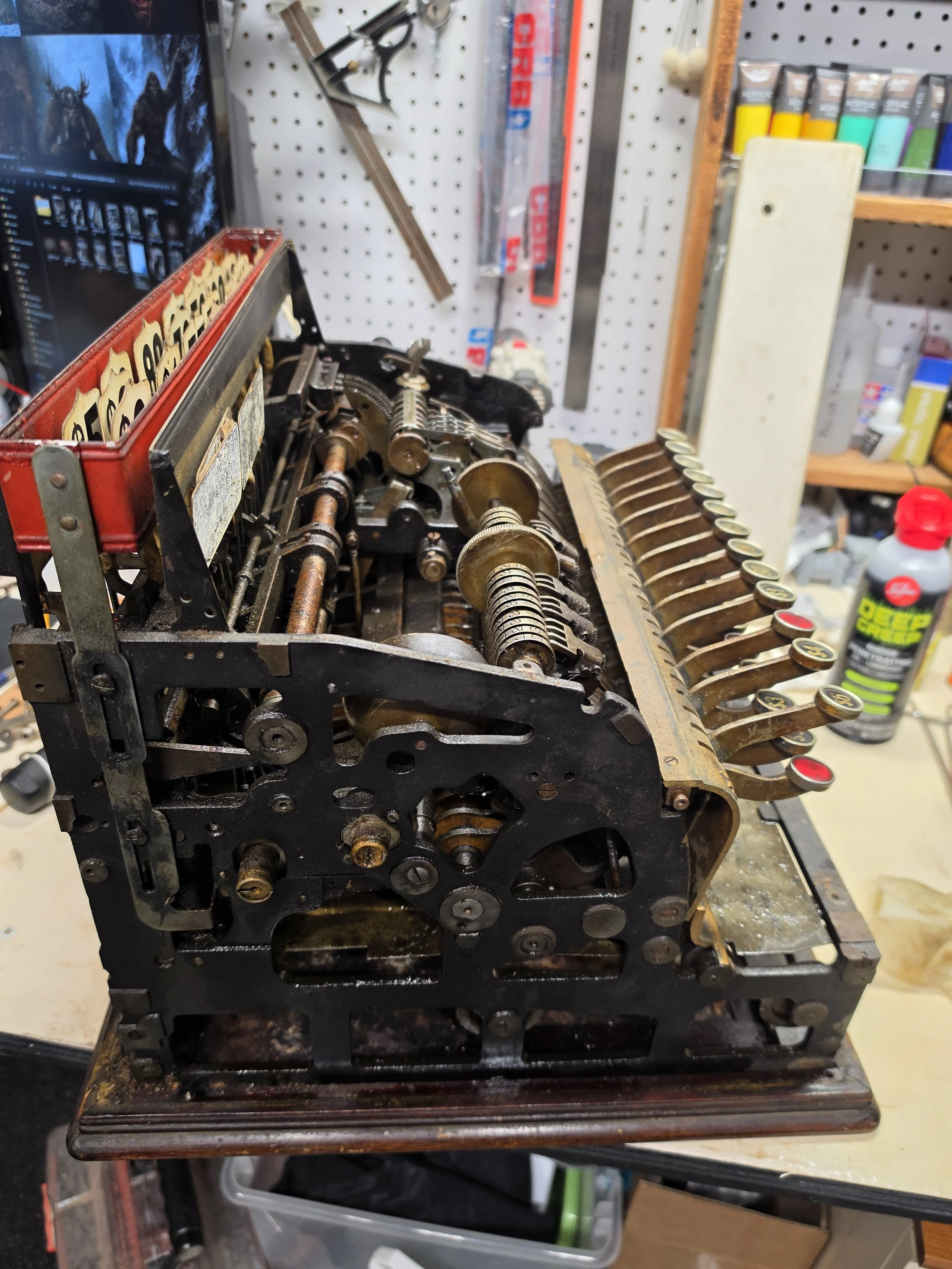
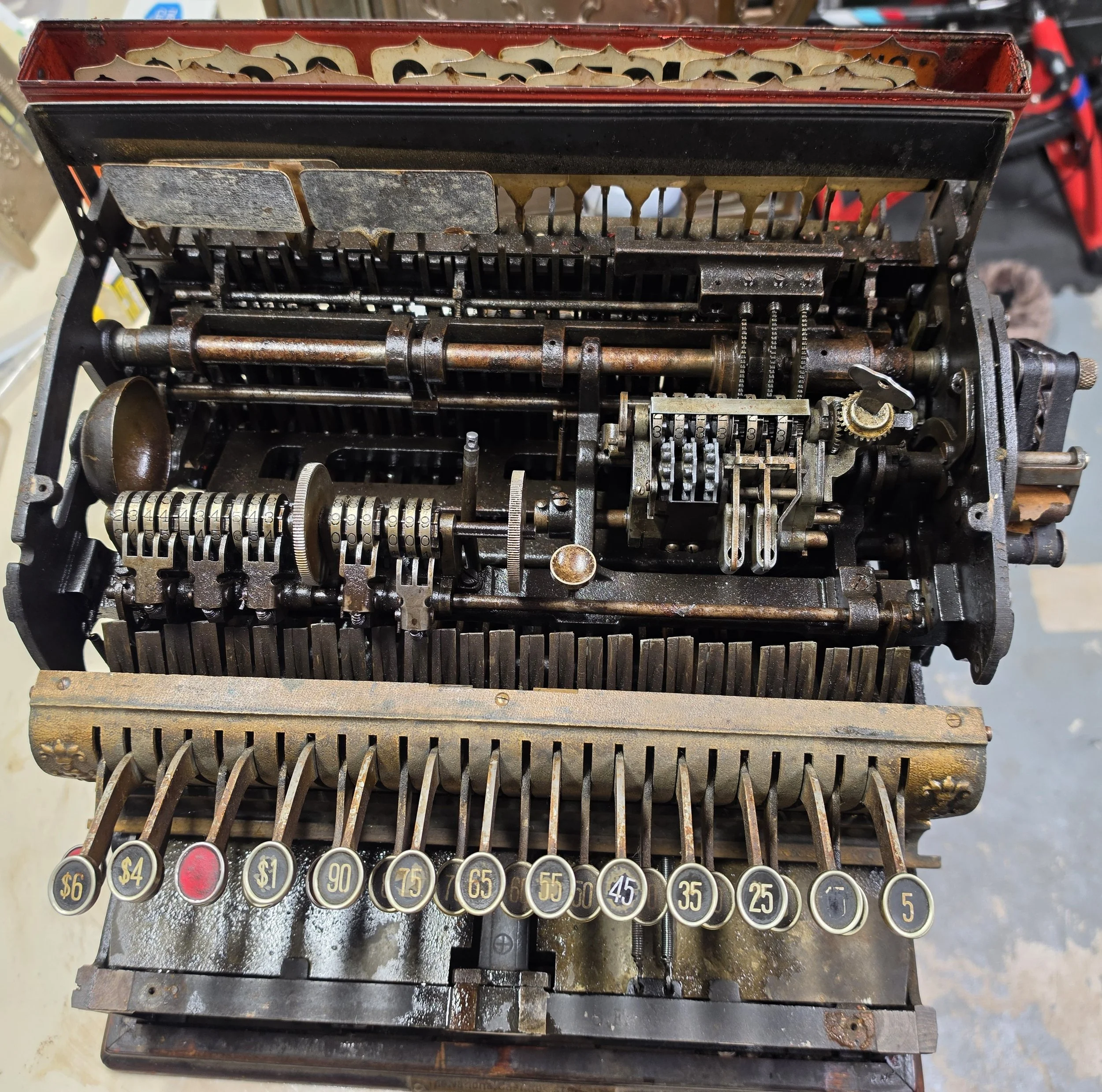
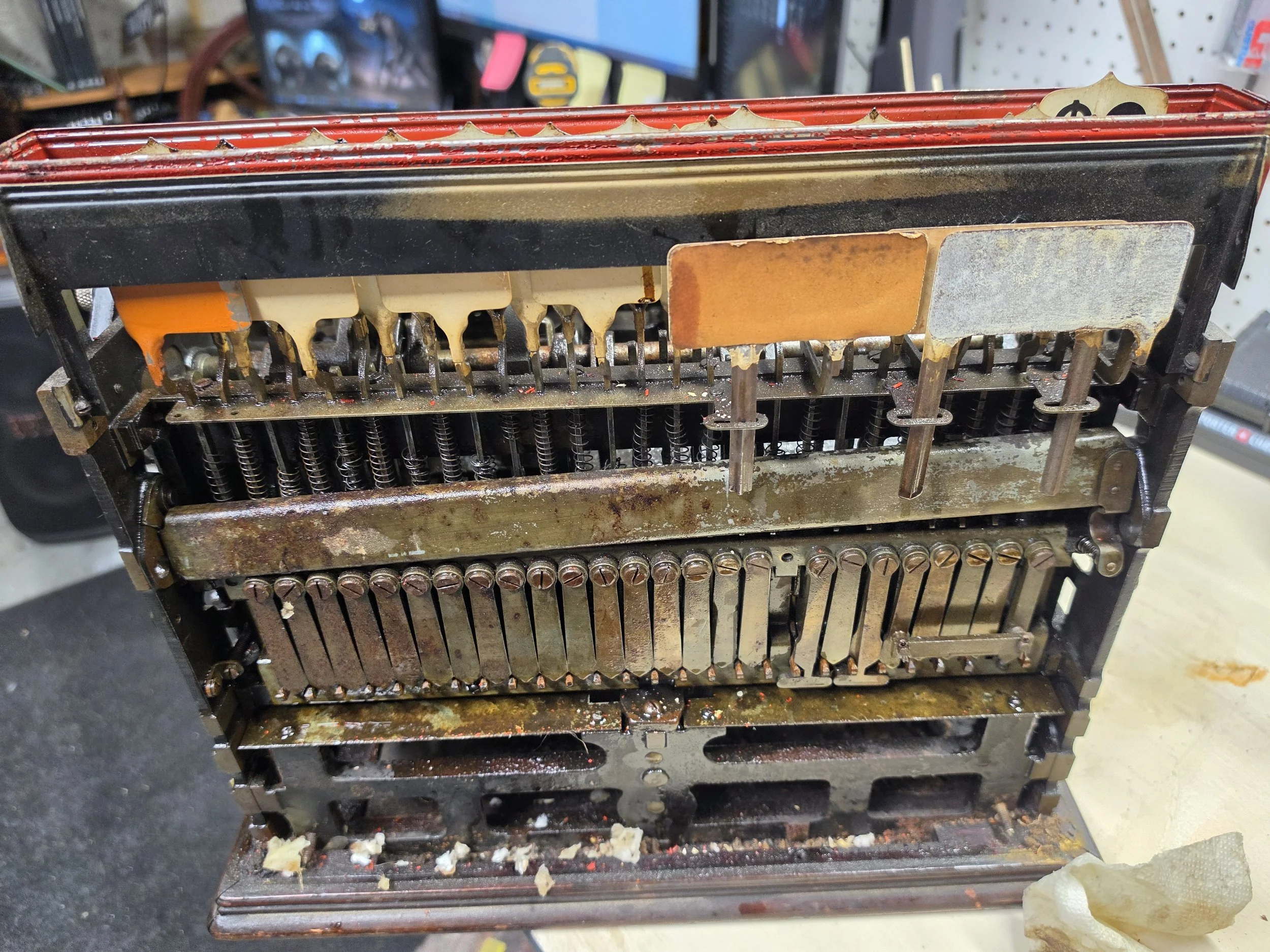
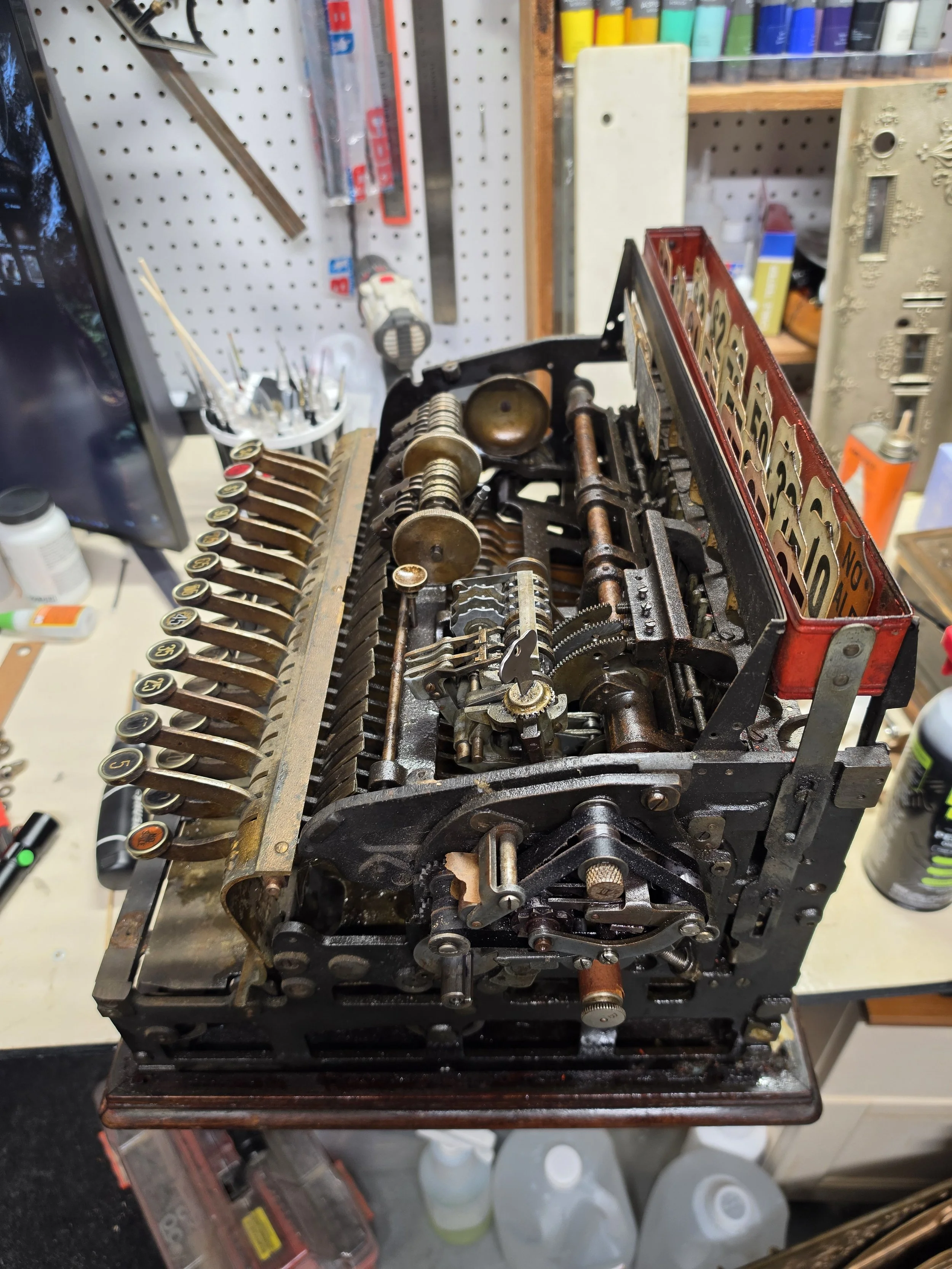
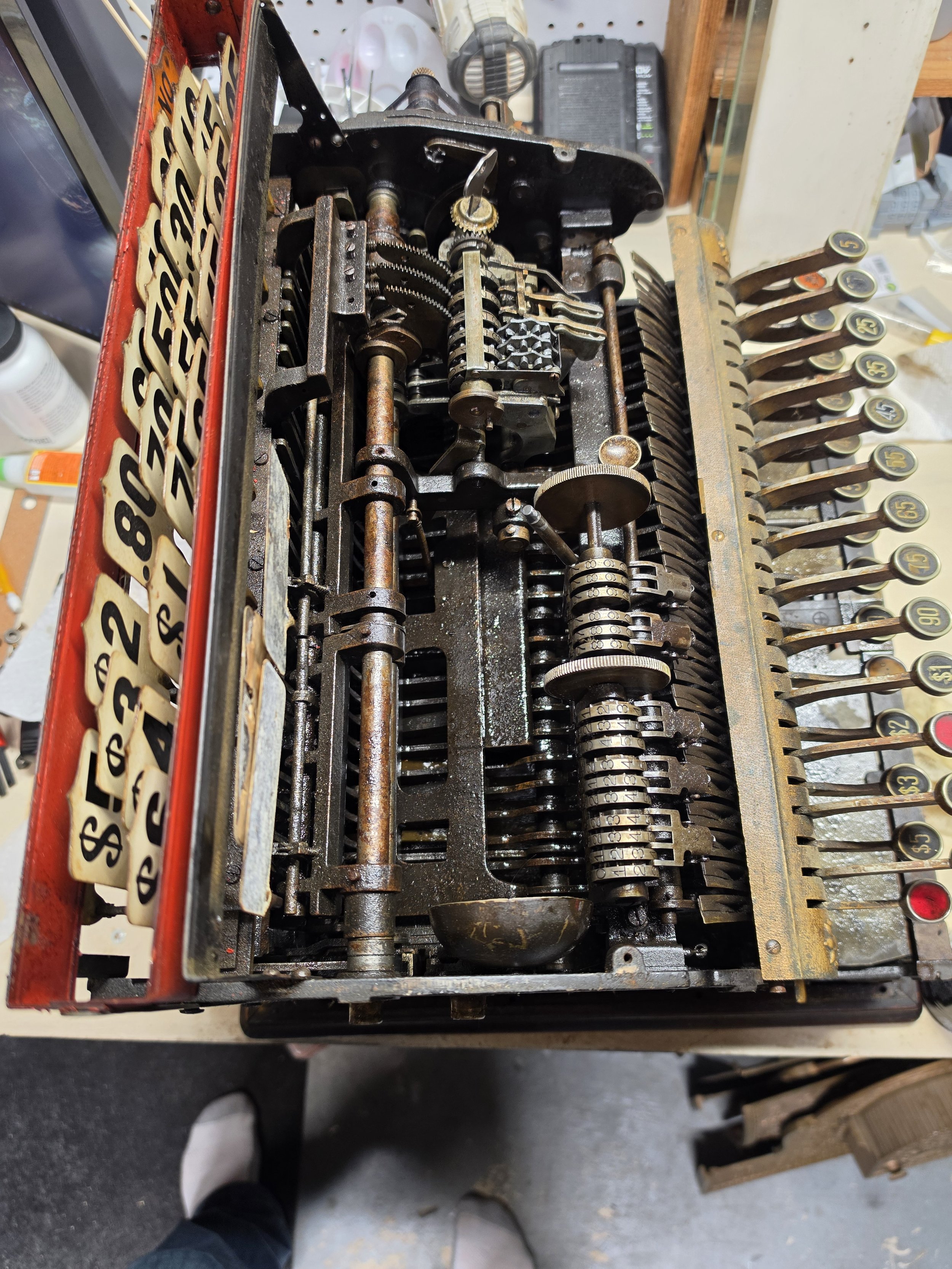
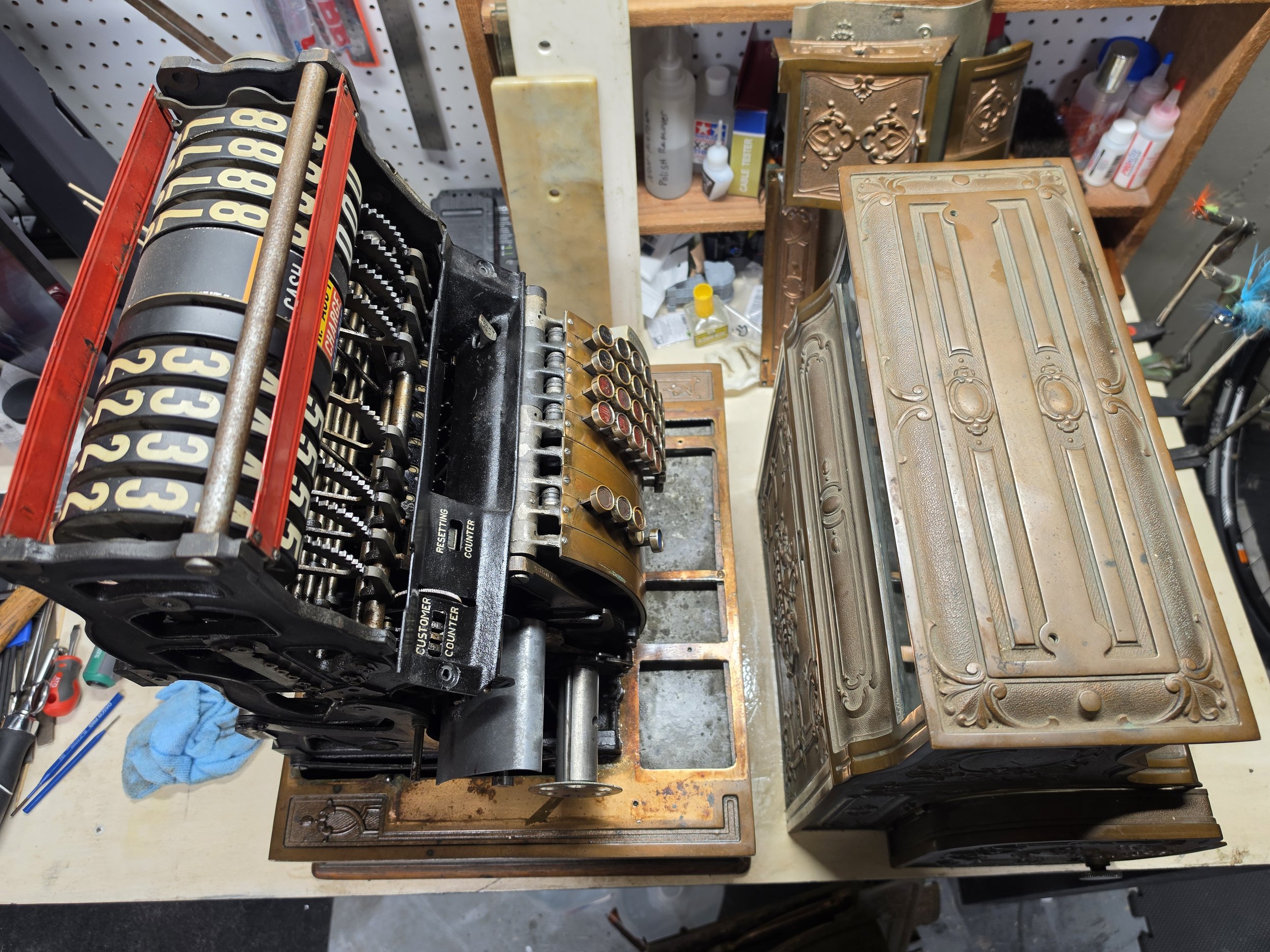
We’ve started opening up the 1912 NCR Model 332.
At this stage, the goal isn’t to take everything apart. It’s to understand how the machine moves, where it’s binding, and what’s still working after more than a century.
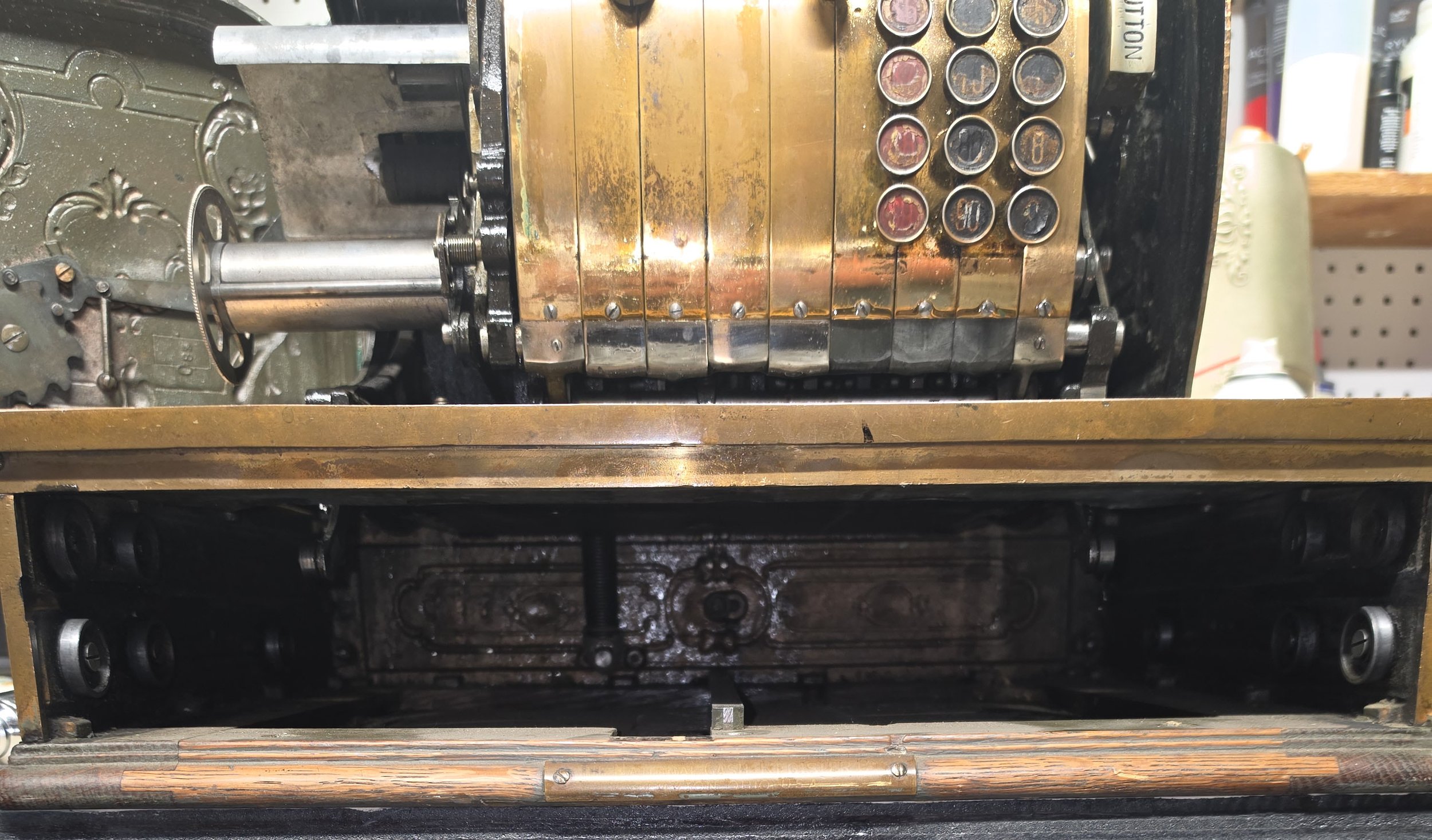
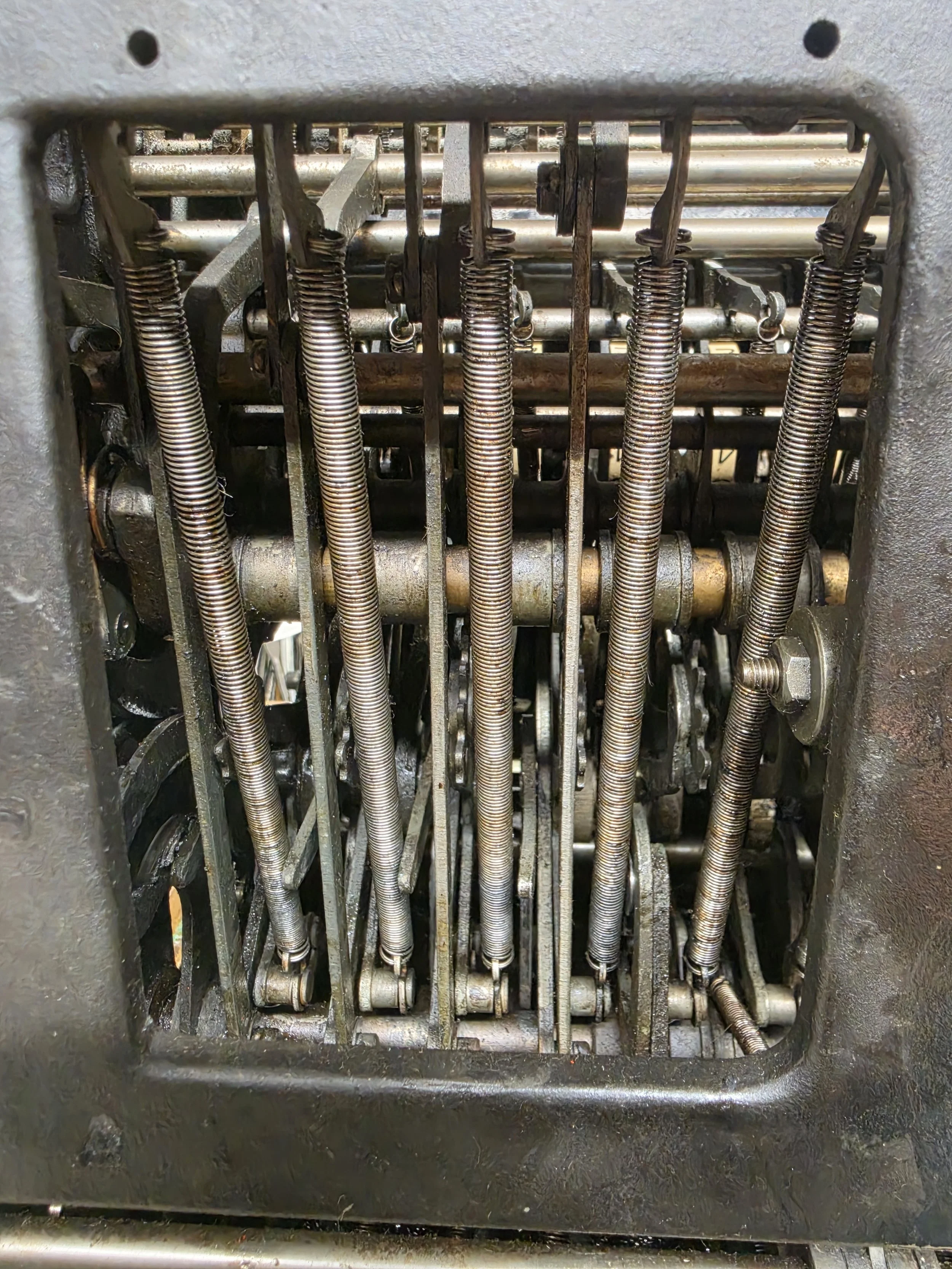
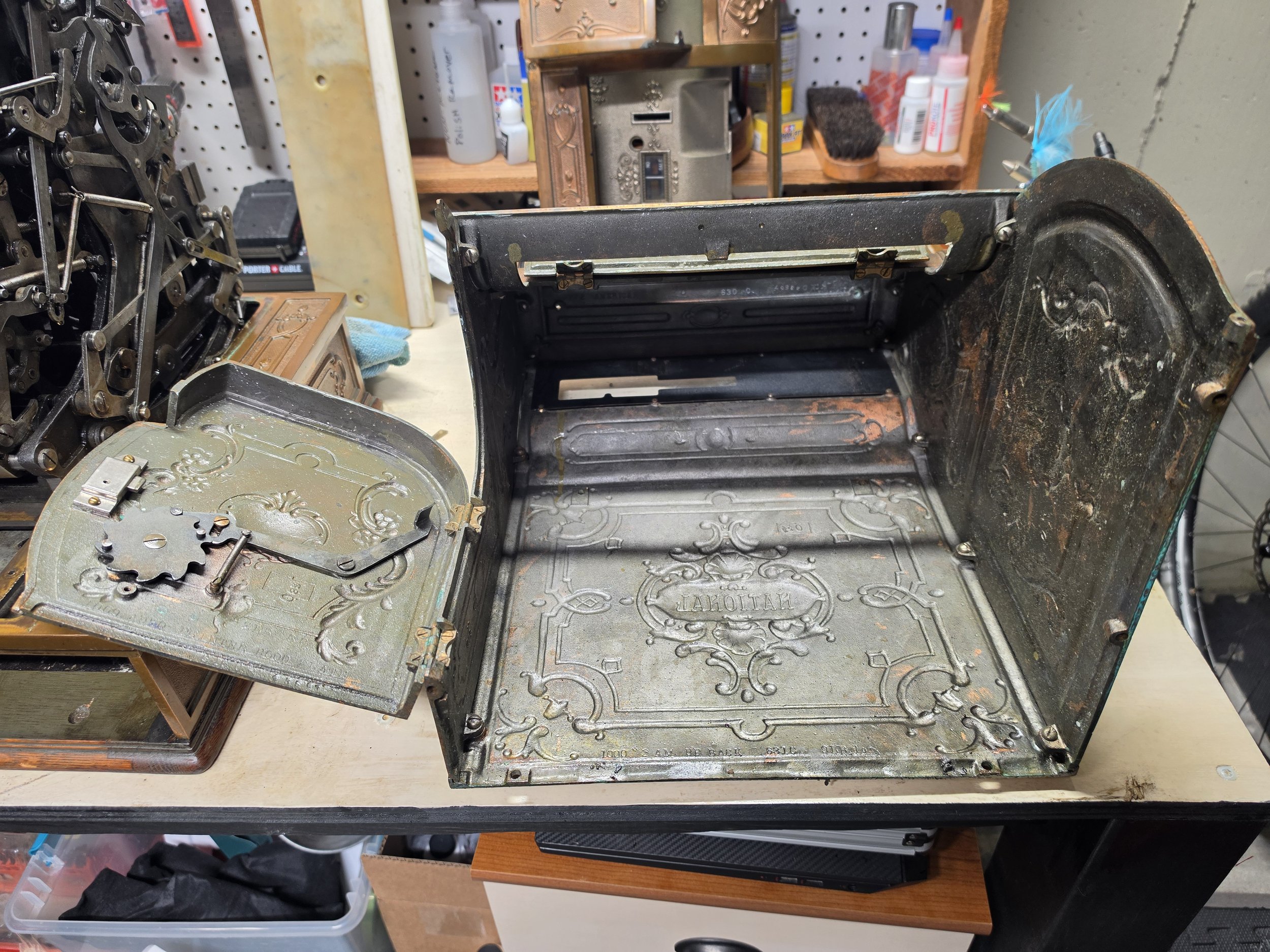
With the panels removed, we can now see the full internal system—gear trains, linkages, springs, and the core adding mechanism. Everything is still there, but years of dust, oxidation, and dried grease have taken their toll.
The next step is controlled movement.
Before any deep disassembly, we’re working the crank slowly by hand to map the cycle. Where it moves, where it stops, and what engages along the way tells us far more than pulling parts out too early.
We’ve also identified at least one broken component. At this point, we’re not replacing anything yet—we’re tracing what that part connects to and what role it plays in the overall cycle.
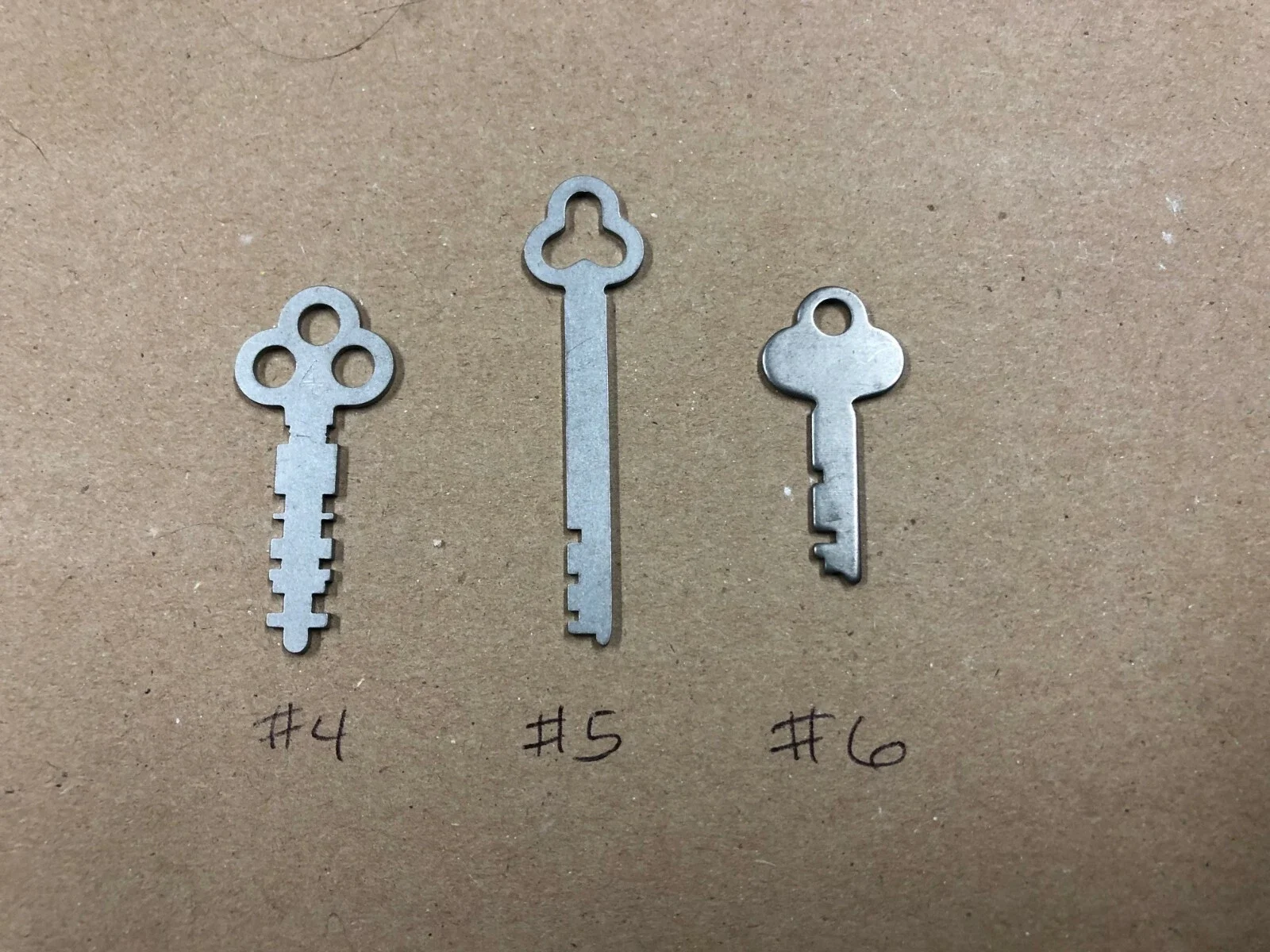
Keys are on the way, which will allow us to fully unlock the machine and continue accessing areas that are still restricted.
This phase is all about diagnosis.
Understanding comes first. Restoration follows.
More soon as we start bringing the first movement back to life.